The playground offers glimpses into how human beings are doing. I watched a young boy go down a slide. At the top of his lungs, he screamed, “Look at me, chat!” As he slid, he was staring at the phone’s front-facing camera, recording himself, pretending to be a streamer. Rather than just enjoying the slide, he had to perform for an audience that wasn’t really there.
This glimpse depressed me. It was at Science World, on the big metal slide, one of the best in the city (Vancouver parents know the one).
Maybe I’m reading too much into it. But this young man had moved his joy from something intrinsic to something that needed to be shared and validated by an anonymous audience.
I’ve heard similar stories from parents about how phones are rupturing childhood. Yes, our schools have banned them. But parents still hand them to their kids. The peer pressure is intense. We overuse them ourselves. The harms are subtle and often ignored.
A young woman I know is struggling at school because she doesn’t know the TikTok slang. She doesn’t know the right dances. She’s being ostracized as a result. She’s 10 years old. I don’t blame her peers. I blame the parents who’ve given their children access to these devices and platforms.
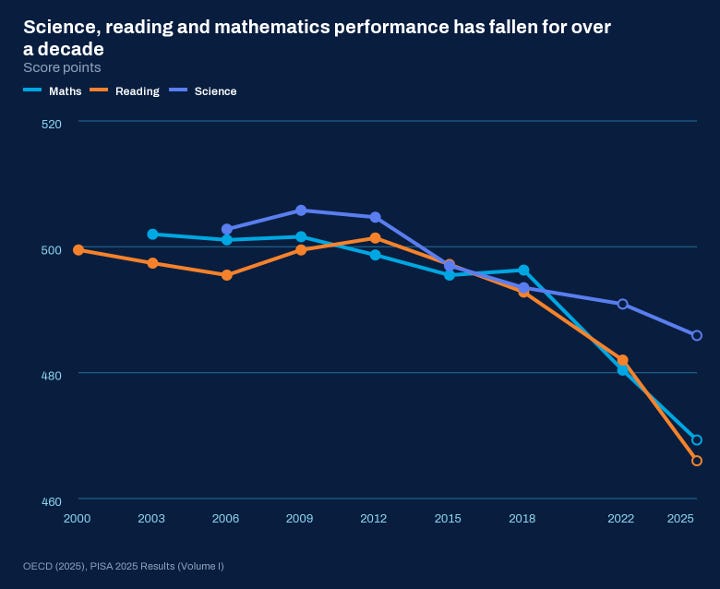
Kids are increasingly unhappy, less social, spend too much time on their phones, don’t read, and their test scores are declining across developed economies.
We have given children access to something that poisons their self-esteem and undermines their development. We don’t hand out bottles of liquor or loaded guns to children. But a smartphone? Merry Christmas, honey.
Here’s a proposal: giving children smartphones must become a social taboo.
It should be seen as equivalent to abuse or sending them to work in a factory. Something that a functional and prosperous society would simply not allow.
This is also represents a massive collective action problem. If one family draws a line, they end up isolating their children. We have to approach this together, through consensus. What we are doing is wrong, and it contributes to a wide range of ills you’ll see in this week’s Ten Things.
Until next week, friends.
This is an emergency. Are we going to act?
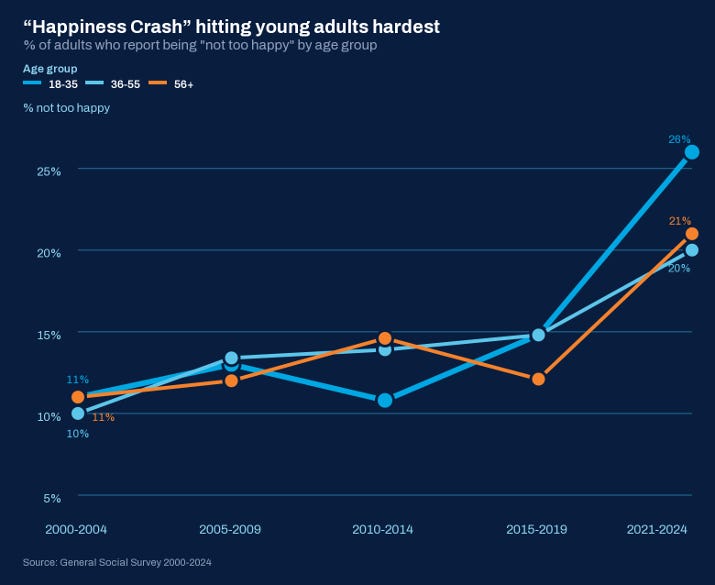
Source: Family Studies
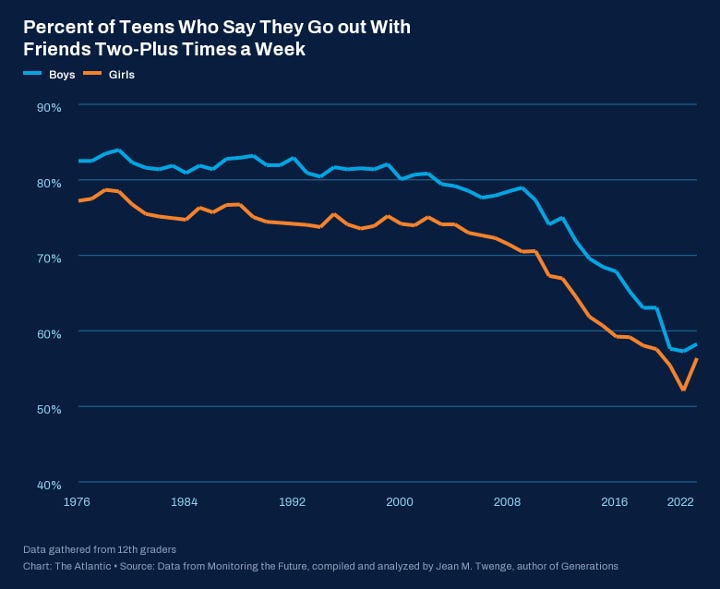
Touch grass may be a phrase, but it isn’t necessarily a behaviour.
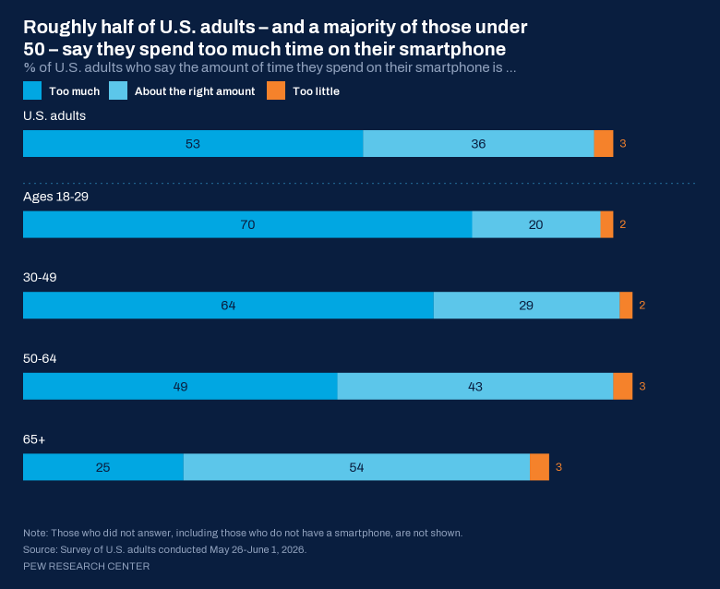
Young folks are at least aware of how addictive these devices are.
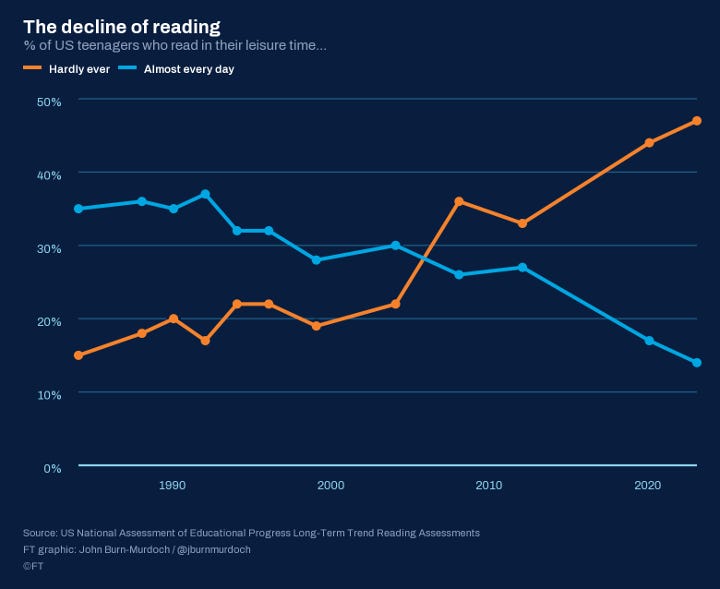
If reading focuses and expands the mind, what does not reading do?
Across the OECD test scores are down. COVID played a role, but so did smartphones.
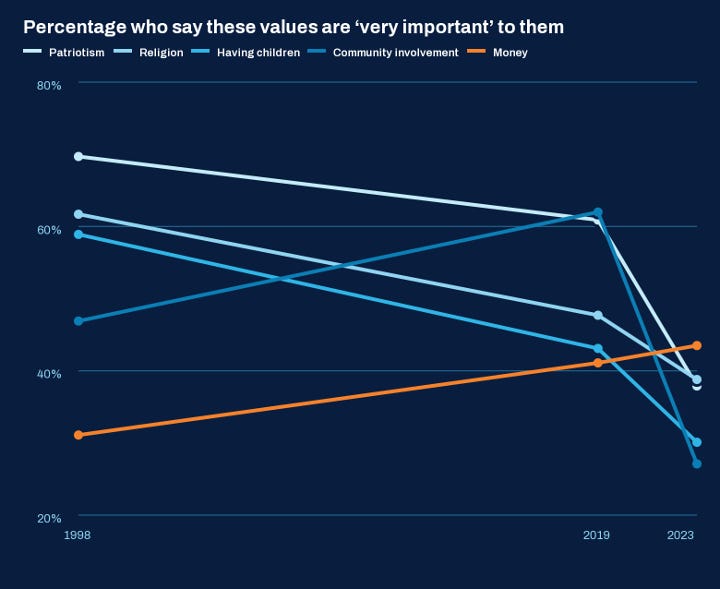
Social media has ingrained a new value in us all: money is the most important thing.
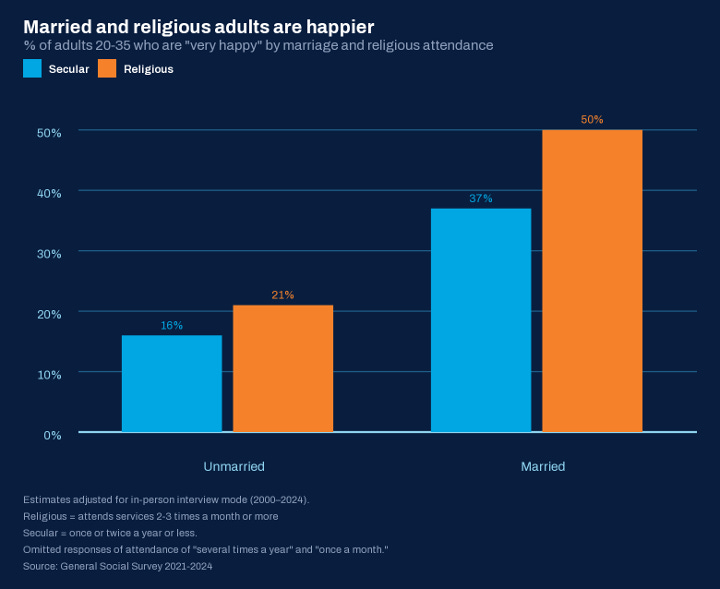
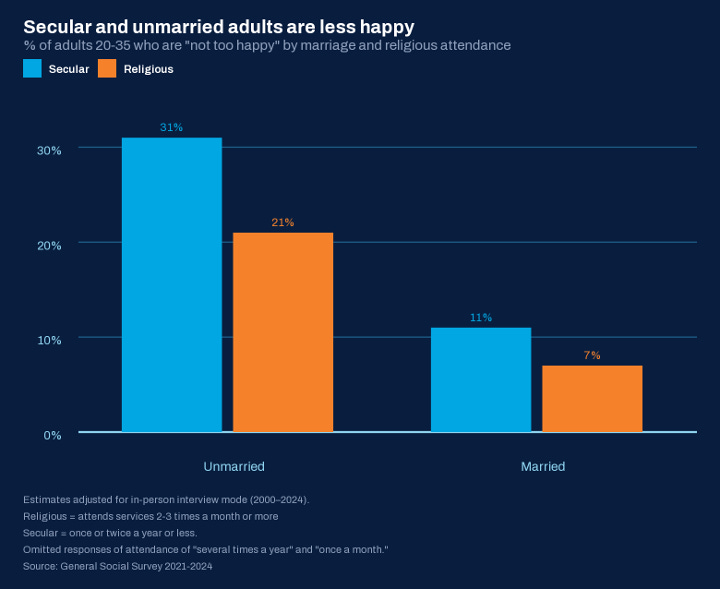
Those who are happy tend to be religious and married.
Source: Family Studies
And those who are least happy are single and secular.
Source: Family Studies
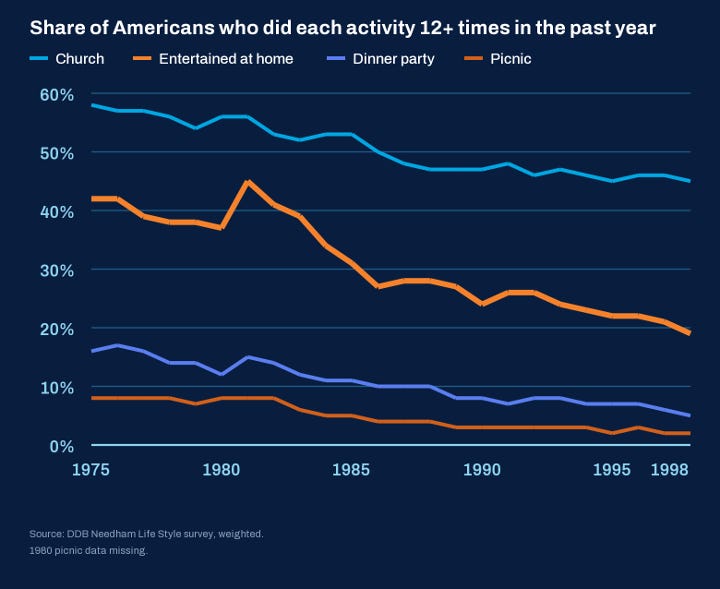
Nobody is hosting guests at home anymore.
Source: Derek Thompson
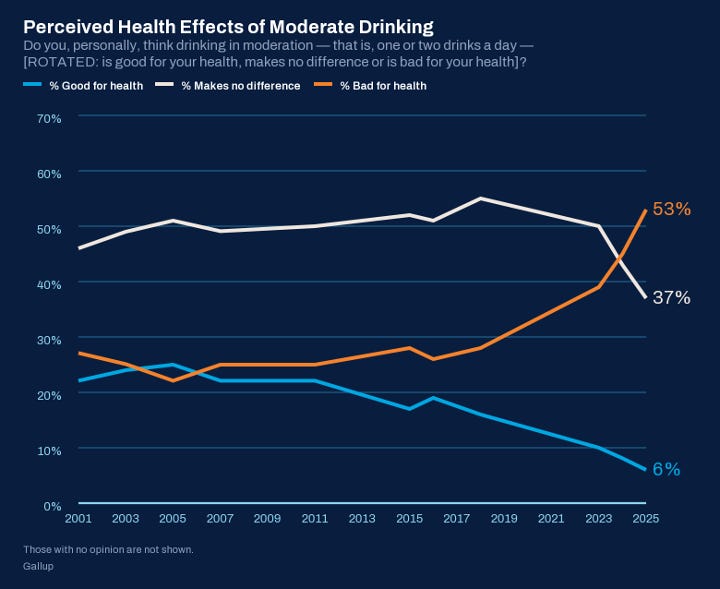
Maybe drinking is bad for your physical health. But what about connection and community?