

The money is frothy. Trillions in committed spend. Frontier labs losing gobsmacking amounts. And when it corrects, our portfolios will get hammered.
But beyond the suspect, fragile, and circular financing, there’s another bubble: the take that AI is a fad.
Paul Krugman makes the best version of it. He calls it a technology “of, by and for oligarchs”, one that has soaked up record spending and created hardly any jobs. Krugman has been here before. In 1998, he predicted that by 2005 the internet’s economic impact would prove “no greater than the fax machine’s.” Whoops.
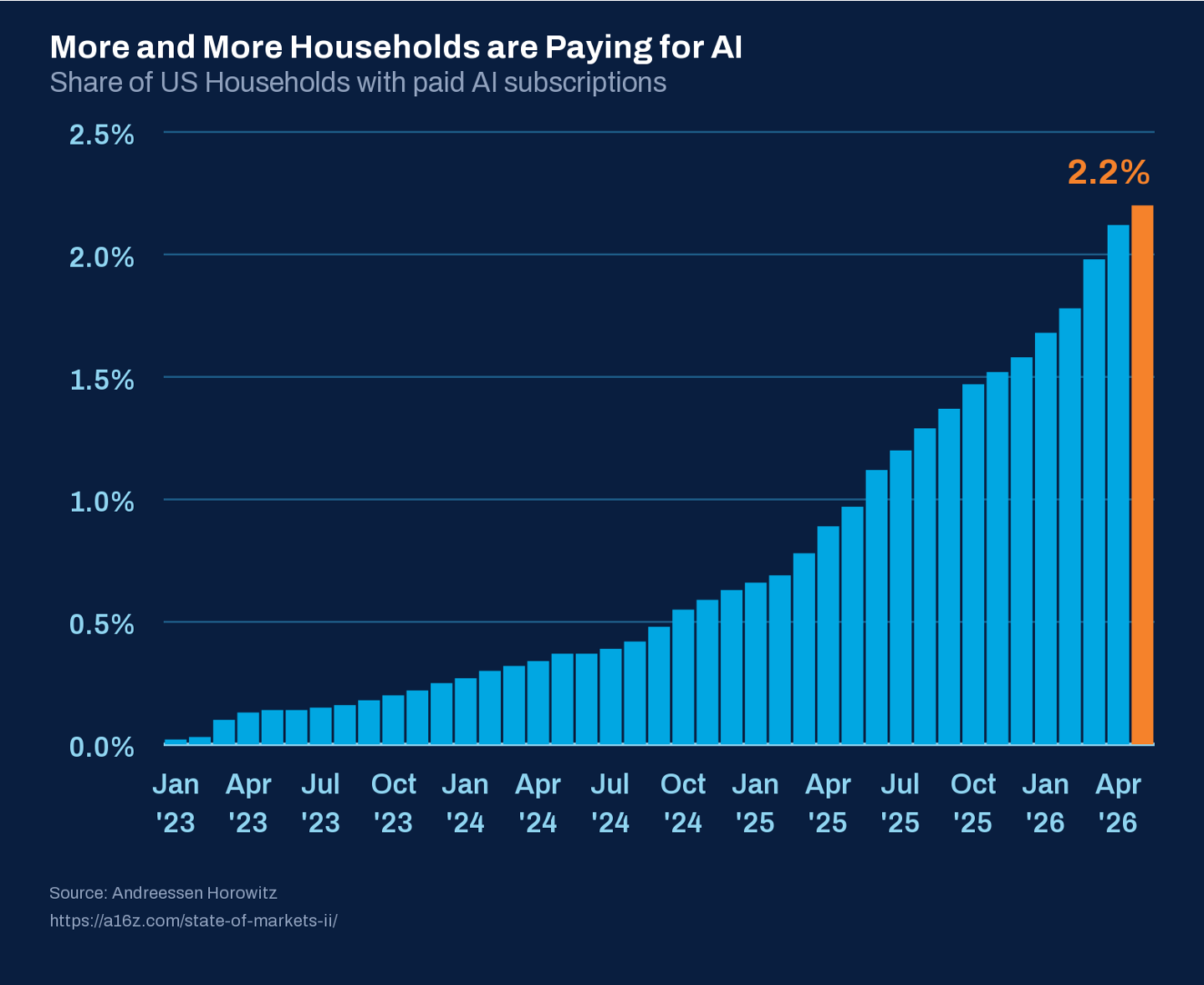
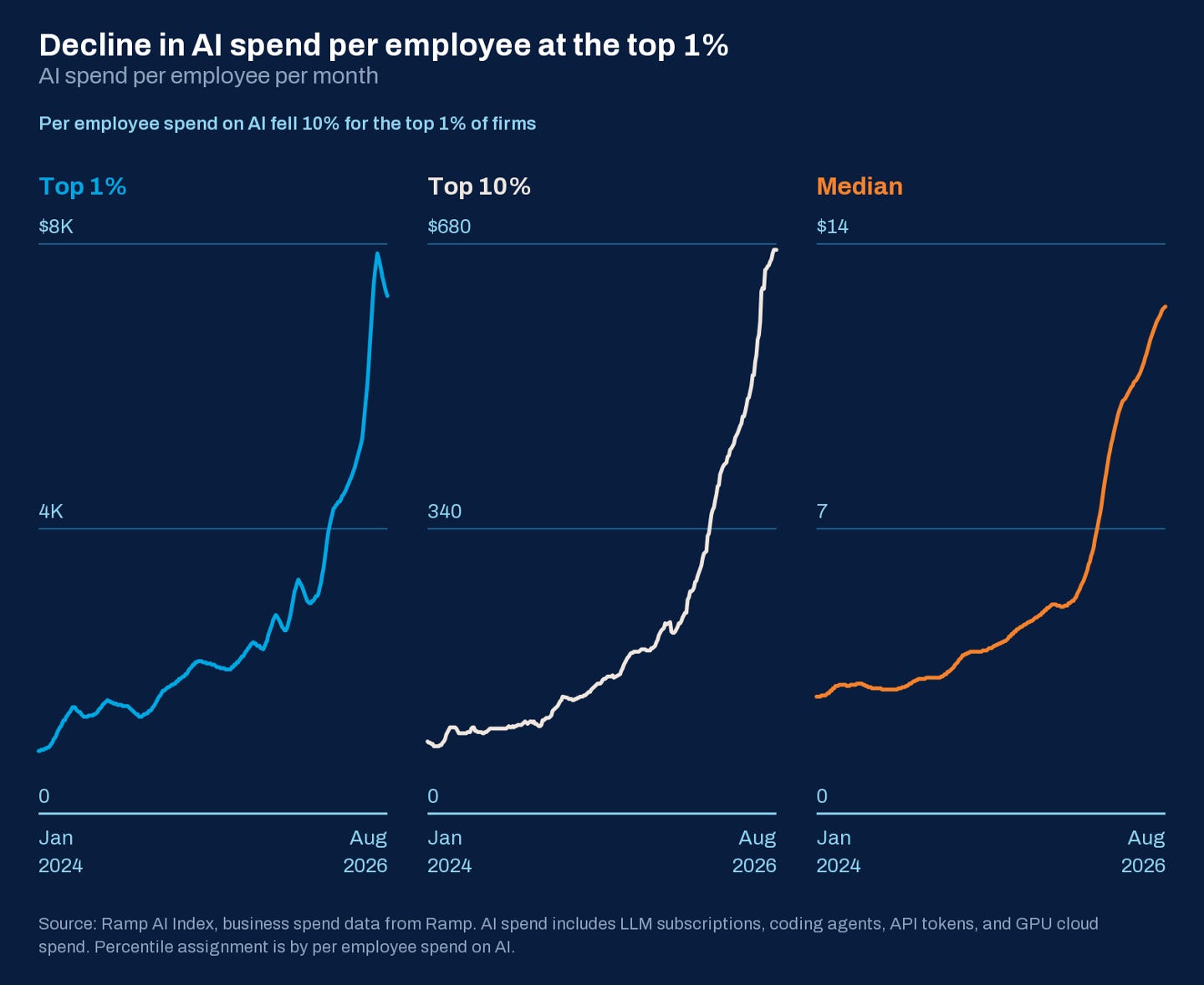
Only 2.2% of US households pay for an AI subscription. The median employee in corporate America has about 14$ per month in spend allocated to AI. There is, in short, tremendous room for growth.
Sceptics are blending two questions: does AI work, and what are companies choosing to do with it?
David Schatsky at Harvard’s Belfer Center studied 22 GenAI applications that executives said were working. In 91% of them, the value came from one thing: shifting work from people to machines.
That’s the least ambitious lever available and not where the payoff is. A study of 2,000 firms found that more AI investment went hand in hand with more sales, more hiring and higher valuations. The growth came from new products, not cost cutting.
Yet Deloitte finds twice as many companies chasing AI savings as chasing revenue. Why? Because cutting is safe. Growth means rewiring how work gets done, waiting to see if it pays, and making mistakes along the way.
Felix Rieseberg, who leads engineering on Claude, offers a better vocabulary. You should read the full thing. He sorts AI ambition into four types:
Speed: the same work in less time. Where most of AI’s value sits today. Also the replacement play.
Altitude: aiming at the outcome, not the task. Less “do this”, more “what are we actually trying to make happen?”
Depth: doing the work the way the best person in the field would. Their tools, their raw data, their standards.
Range: pulling in fields the task never seemed to need, because borrowing that expertise used to cost too much.
Sadly, most AI strategy seems to stop at Speed. Rieseberg’s key insight should inspire all of our thinking - the bottleneck isn’t the technology, it’s what we believe we’re allowed to try. (Or as Big Jim would say, “You’ll only see it if you believe it.”)1
Academics, policy wonks, people already in secure positions: they’re very good at explaining why AI is overhyped, pointing out pitfalls, contradictions, or placing it in perspective. But as a group, I suspect they are 1) kind of bad at actually using AI at its highest level and 2) as a result, much less comfortable imagining what it’s good for.
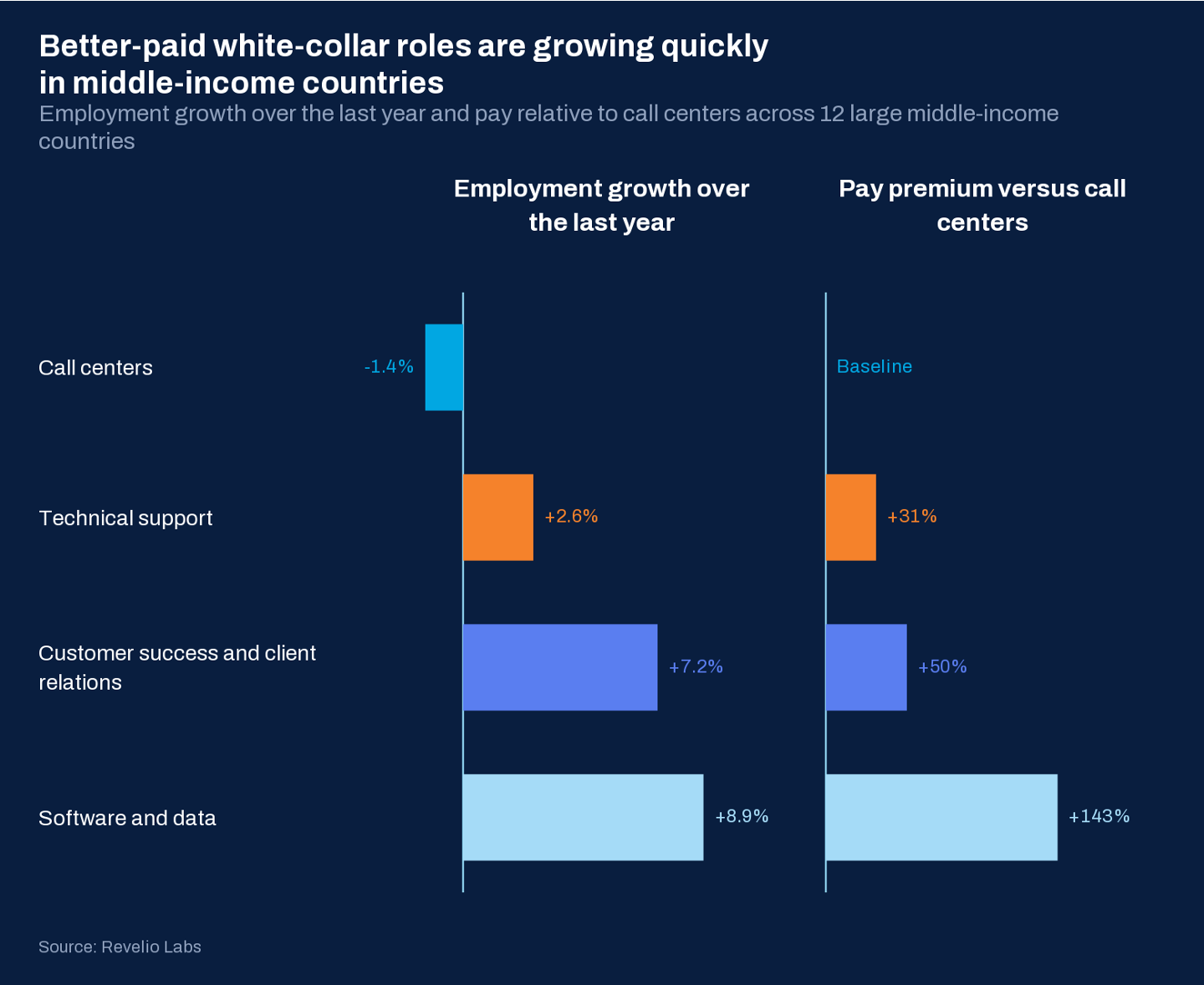
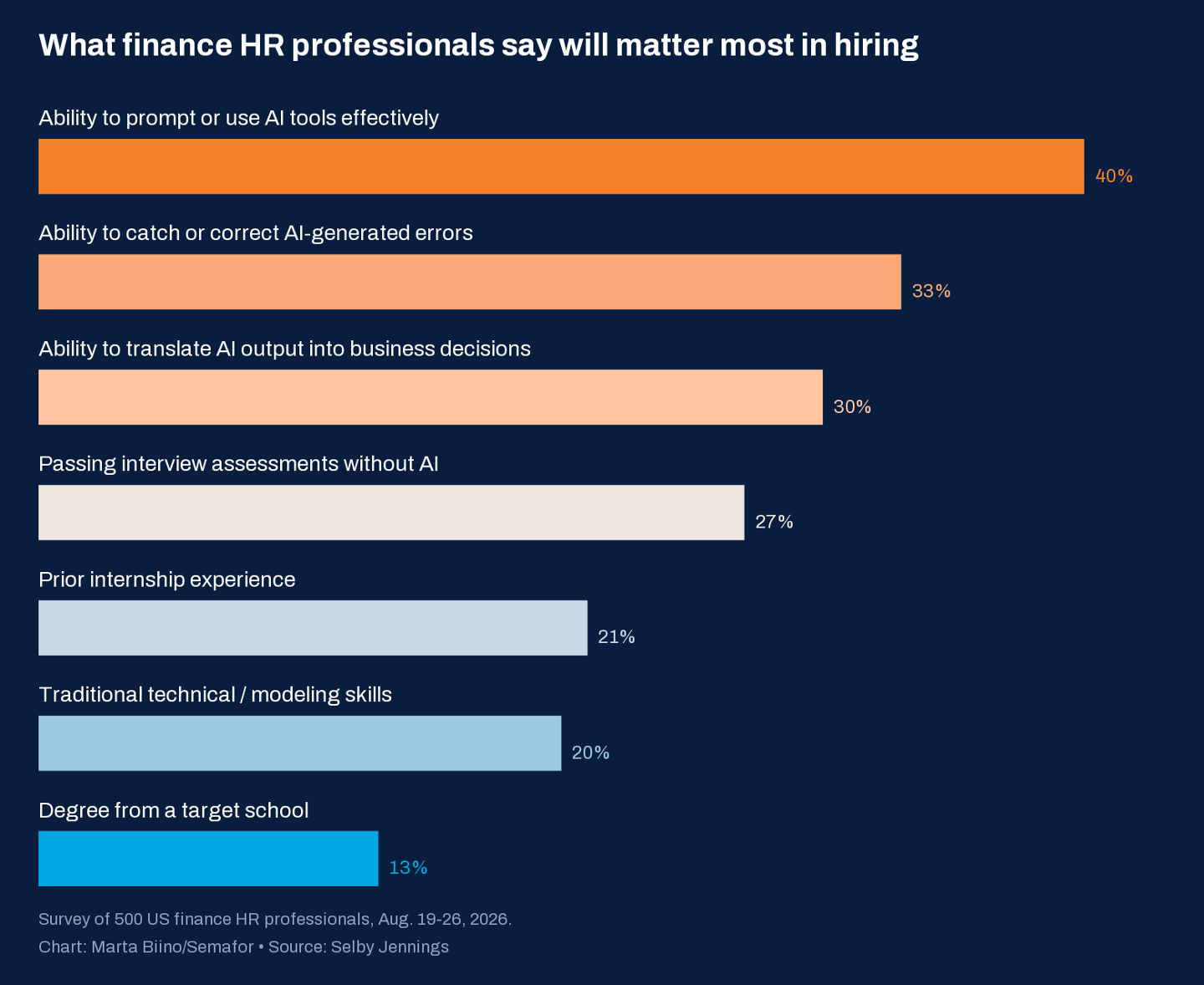
Every chart this week builds on this theme. Where AI is actually killing jobs (call centres), the ones it’s creating (construction, software and data), and evidence that HR managers in finance now care more about your AI fluency than your alma mater (sorry, academic recruiters).
Until next week, friends.
98% of households don’t pay for AI. Sothere’s a lot of room to grow.
The tokenmaxxers are clawing back spend. The median employee is a massive, untapped market.
Source: Ramp
The labs’ revenue is the hyperscalers’ investment case which has become semiconductor FCF.

All this spend has created a job boom in key segments of the US economy.
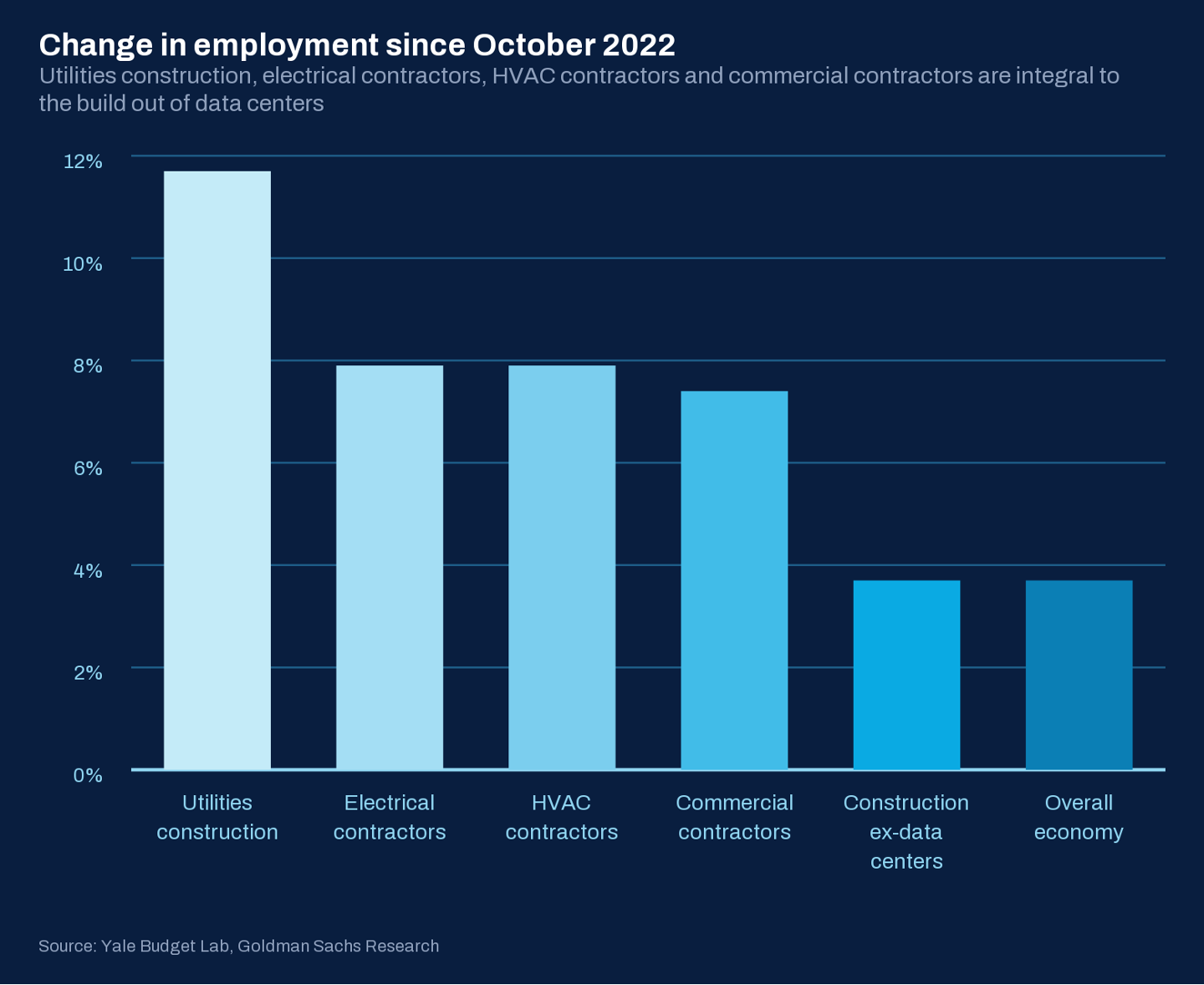
While broad based job losses aren’t here (yet), call centre operations are an exception.
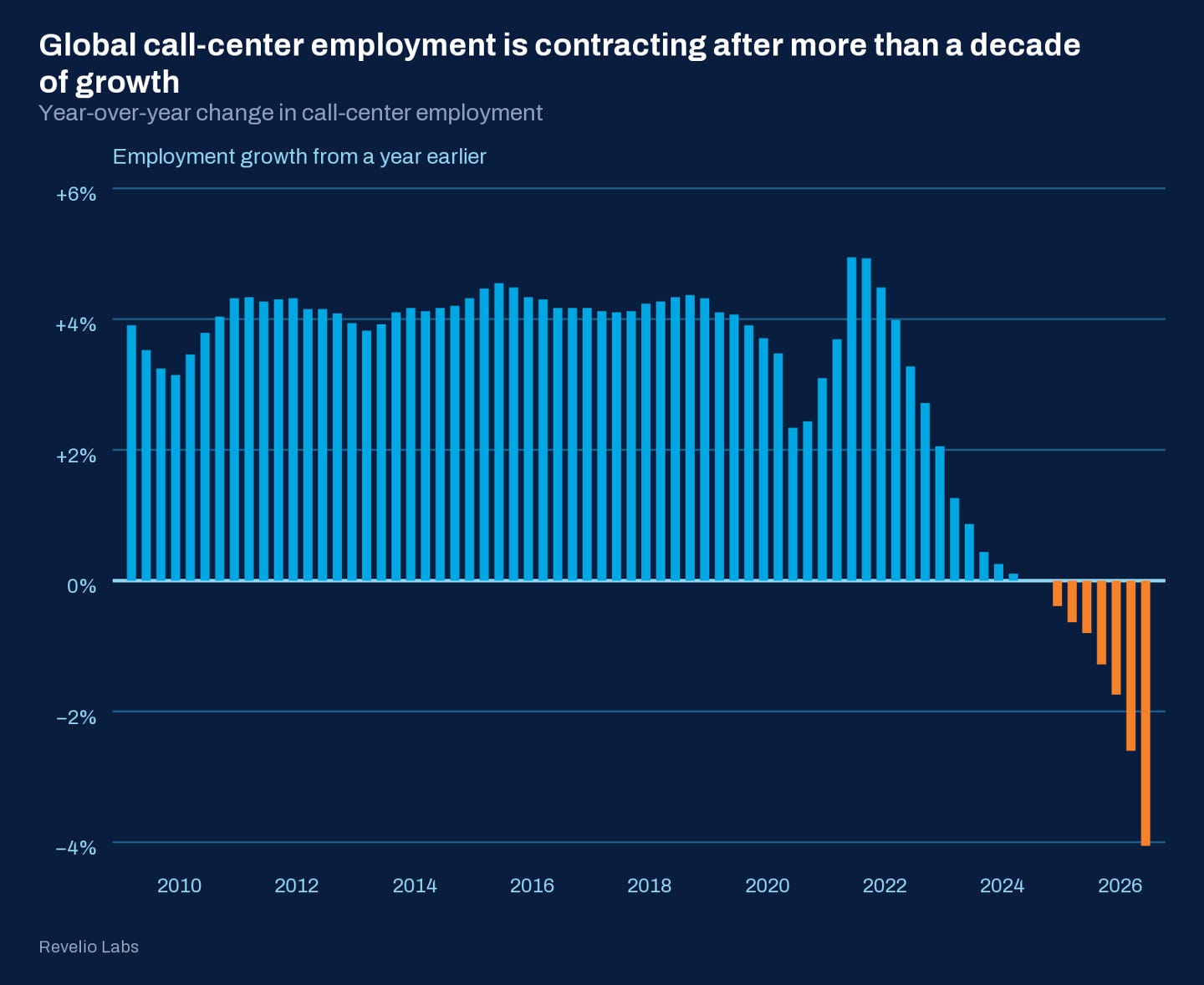
The job losses in call centre are hitting high income countries the hardest.
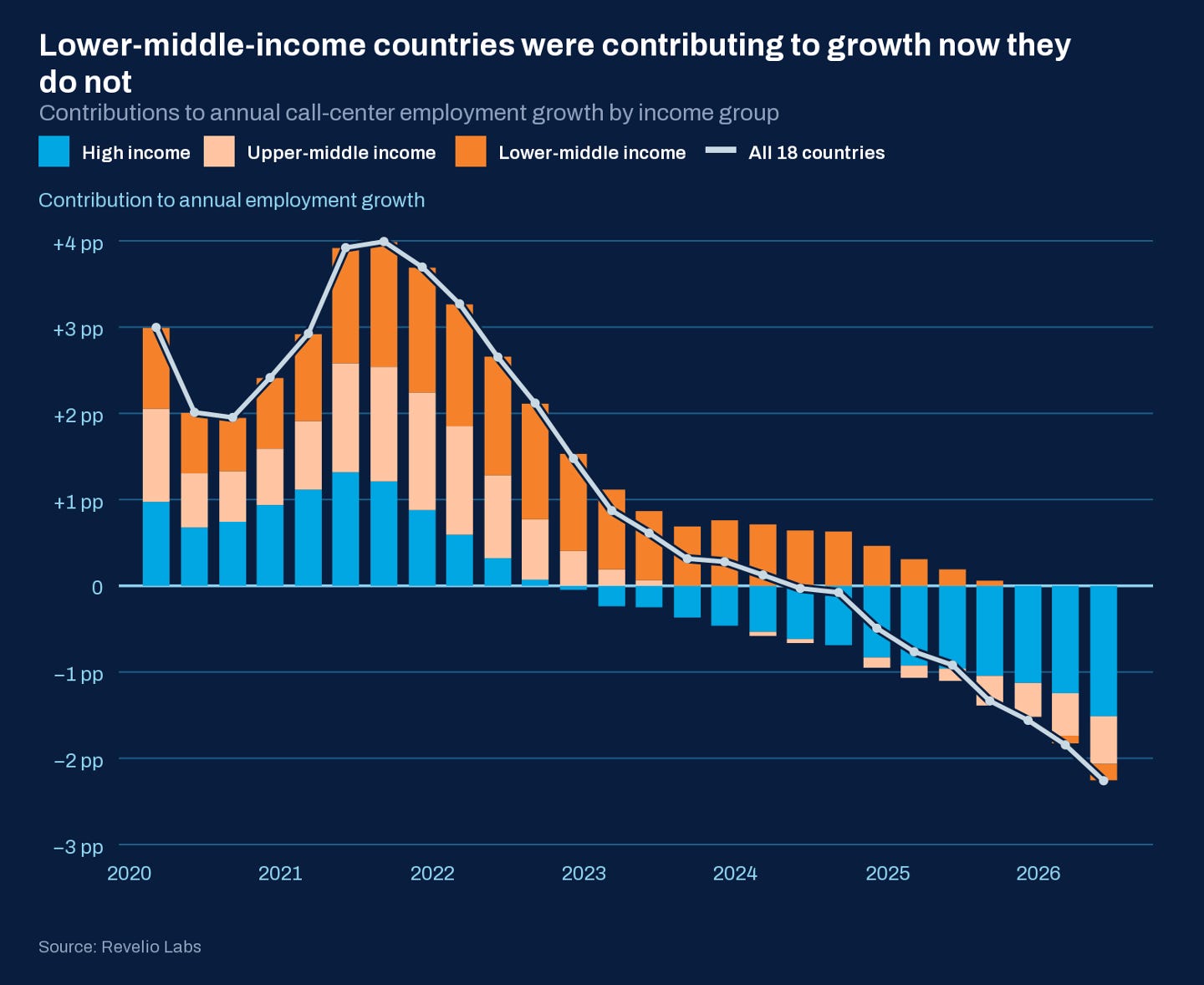
While the call centre declines, software anddata jobs are booming (and pay much better).
HR managers in finance don’t care where youstudied. They care about your AI fluency.
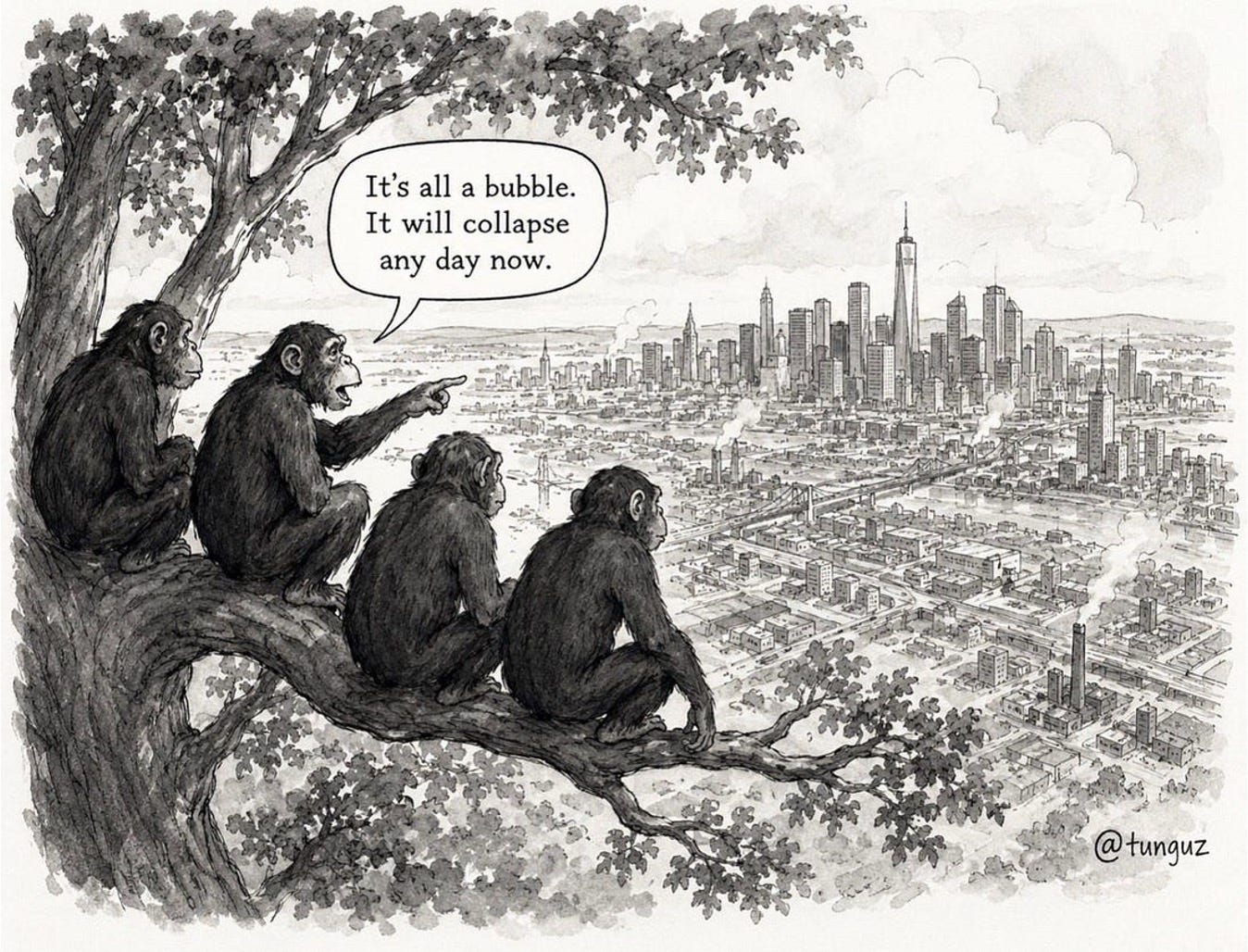
If you understand this reference, we can be friends forever.