In 1994, seven tobacco CEOs told Congress that nicotine wasn’t addictive. Radium makers told factory workers the glowing paint was safe; not long after, workers started to die. Leaded gasoline’s backers insisted it was harmless for half a century, while generations of kids breathed it in.
Liability eventually arrived, but only after the damage was done.
Jensen Huang, Nvidia’s CEO, believes it’s his responsibility to not do bad things. That he takes this very seriously. That the risk of legal liability incentivizes high-quality decision-making. If we had to distill (pun intended) his argument about AI safety to one line: If a model isn’t safe, don’t ship it.
It’s tempting to agree with him. But the historical track record isn’t great. A CEO’s incentives are to create shareholder value first, and manage liability later. Great if you are holding $NVDA, not so great if you just want to manage societal risk.
Acknowledging risk is not anti-innovation. It makes innovation stick. Cars got seatbelts and a regulator, and US road deaths per mile driven fell by roughly three quarters.
Flying got investigators, black boxes and a culture of reporting every near miss. Now it’s the safest way to travel. Nobody boards a plane because they trust the airline’s CEO. They trust the regulators.
Bill Gates has been sounding the alarm of late. His core message? The models that are out there, in the wild today, carry the potential for catastrophic risk. In the long run, the risk of massive economic disruption and some existential questions about alignment.
But the biggest concern is more immediate. Bad actors today could leverage AI to start pandemics, attack financial systems or cripple utilities.
I’d like to propose Pascal’s Wager for the AI age:
“Install the safeguards and be wrong? We lose a few months. Skip them and be wrong? We lose the bet.”
Take the time and listen to each lay out their argument in interviews with Ezra Klein:
Jensen Huang Thinks A.I. Alarmism Has Gone Too Far
Bill Gates: A.I. ‘Makes Nuclear Weapons Look Like Nothing’
Putting the pace of change in context.
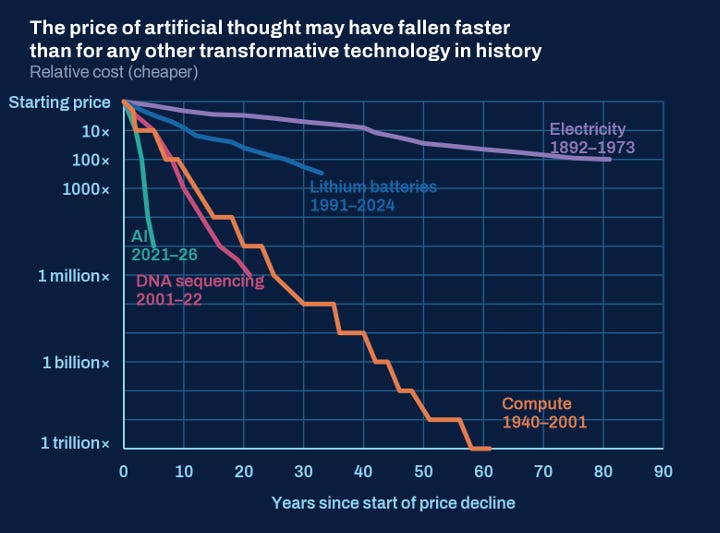
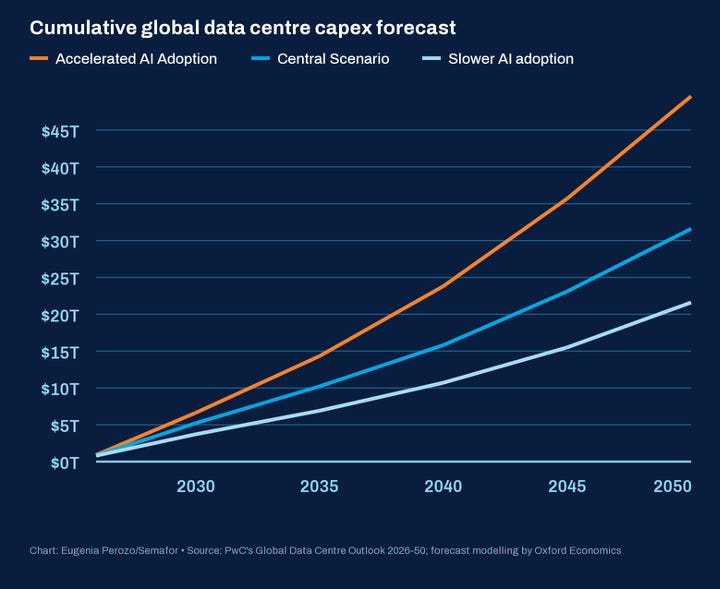
Extraordinary capital outlays are enabling this change.
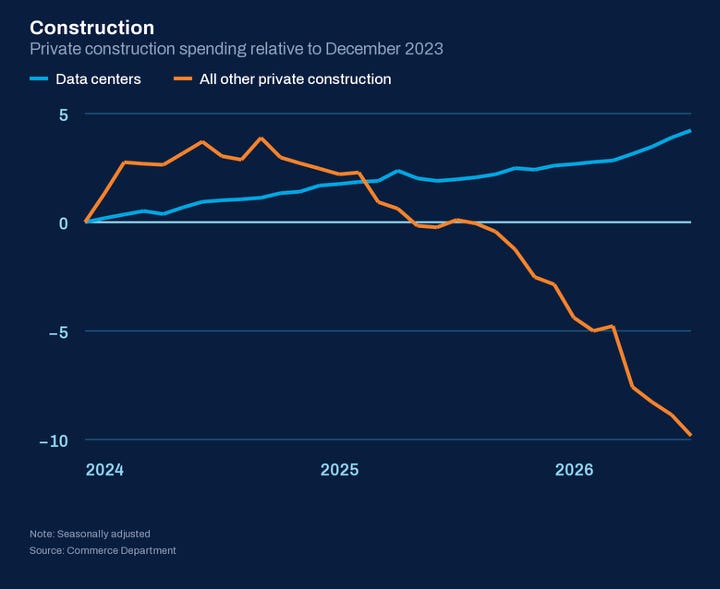
Spending on data centers (and associated tech) exceeds residential investment in the USA.
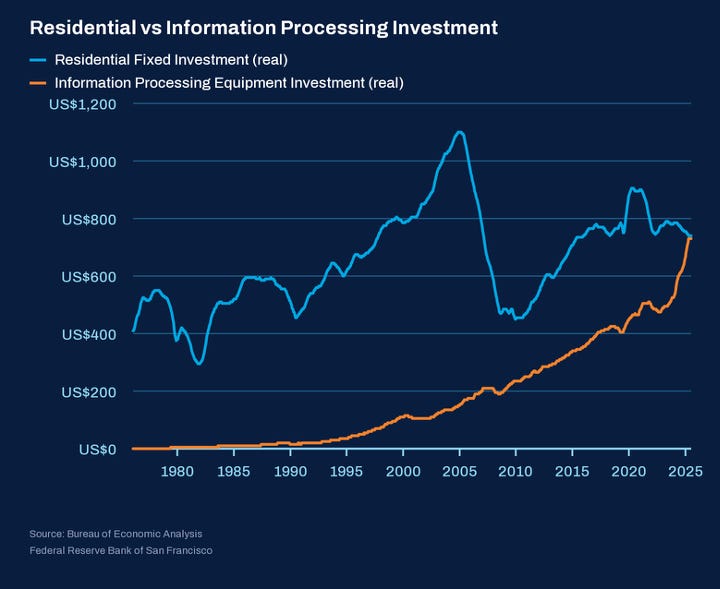
Source: Federal Reserve Bank of San Francisco
Maybe this time it really is different.
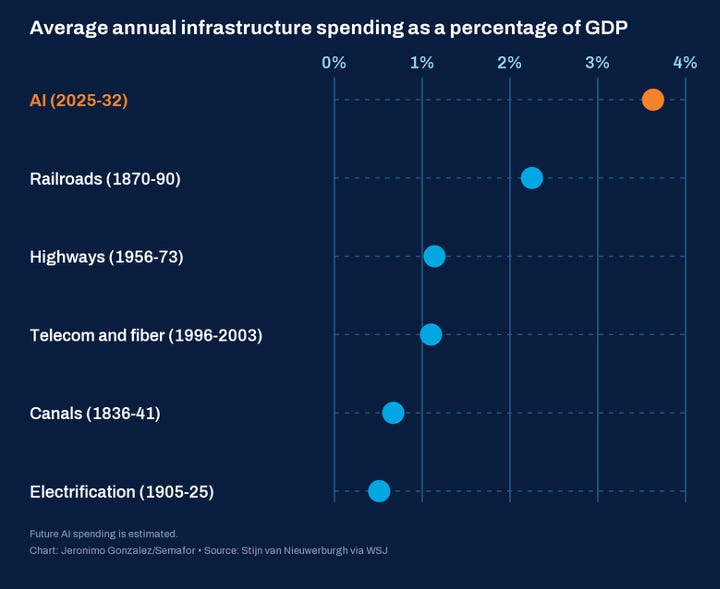
Some bullish projections, sure. But worth pondering.
American exuberance (and capital) is a magnet for AI research talent.
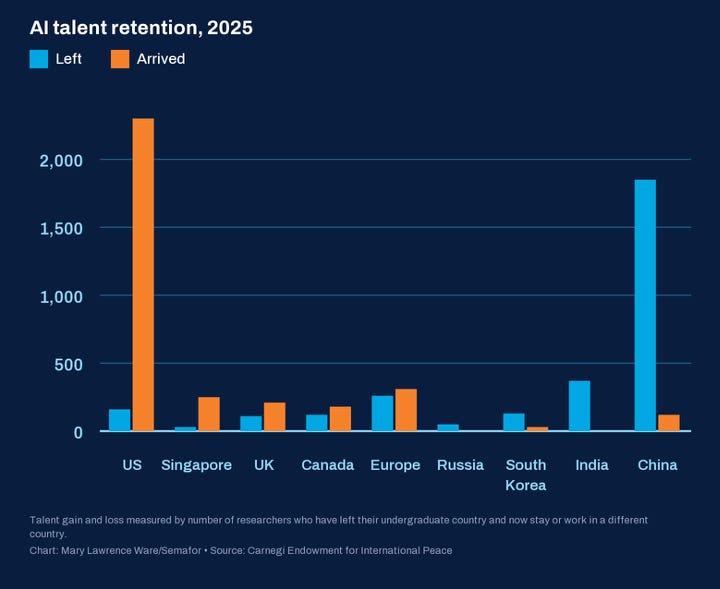
Source: Carnegie Endowment for International Peace
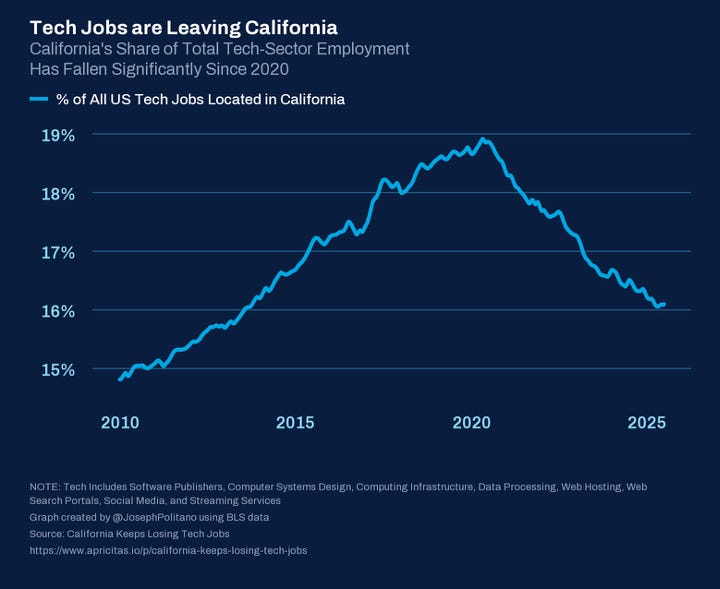
For tech employment, California isn’t in the dominant position it used to be.
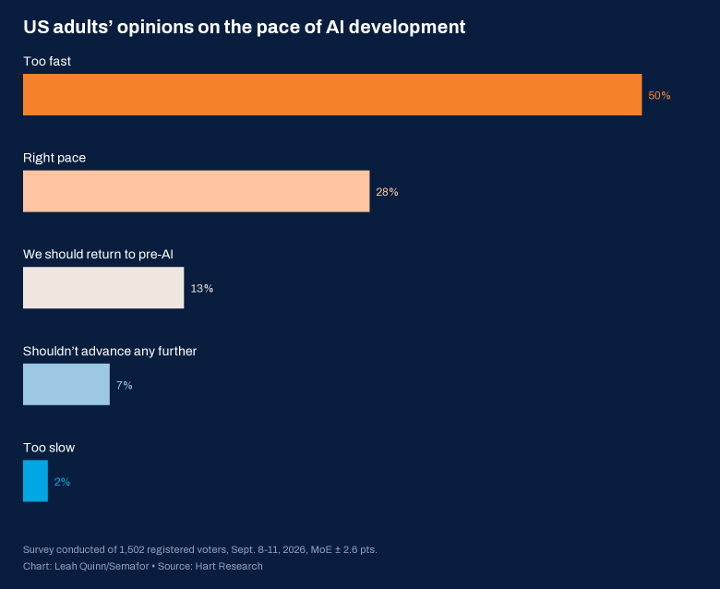
All this build-out is not at all popular.
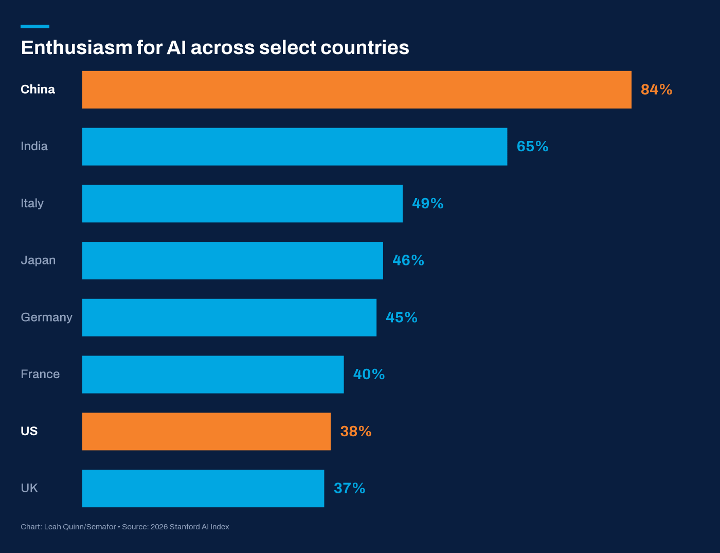
What if adoption is more important than capability? If so, China is winning the AI race.
Source: Semafor