Energy systems have entered into a positive feedback loop. The more we scale wind, solar, batteries and grids, the more we learn. And (if trends hold) the cheaper things get.
This is all built on the back of Chinese industrial capacity and the willingness of importers to cooperate. Countries in the global south tend to lack the capacity, tools, or concentrated opposition (hello auto unions) to slow this down. And as fast-growing markets for energy, where they go, so goes the world. (Caveat here for the insanity that is data center construction in the United States).
An important question - is it a good idea to outsource all this industrial activity to a foreign country? A simple question, but with no simple answers.
And then there’s the lesson from Hormuz: fossil fuels are a driver of inflation, volatility, and insecurity. For one example this week, just look at the fuel lines in Bali. It bears repeating: you can’t blockade the sun.
The technology, infrastructure, and capital are now in place to build the next version of global energy systems. They have reached, in effect, a “positive tipping point”. The more wires chew pipelines, the easier it gets for wires to chew pipelines.
The concept, popularized by Tim Lenton at the University of Exeter, suggests that in combating climate change, we need to be as interested in achieving positive tipping points as we are in avoiding negative ones (like AMOC collapse).
Of course, for other systems, things aren’t as simple. Panels get cheaper the more we make. Wetlands, not so much. And as far as I know, there’s no learning curve for sustainable fisheries. There are places where techno-optimism can only take us so far. We’re going to need to positive tipping points in our food and finance systems - and regulation and social pressure will the big drivers there.
But in energy, the game has changed. And my biggest concern: Canada hasn’t quite noticed. Sure, the Carney government has shown a real appetite to move fast. Good. But on the projects that are getting the most attention - LNG Canada Phase 2, PacificLink - I’m lukewarm at best. Not because of the negative climate impacts. Because I think we’ll arrive ten years late to a market that doesn’t need us.
And so, this week puts that all in context. Chinese economic activity, exports, learning curves, and the effects of Hormuz on global oil consumption. Oddly enough, there’s a good deal to feel positive about.
Until next week, friends.
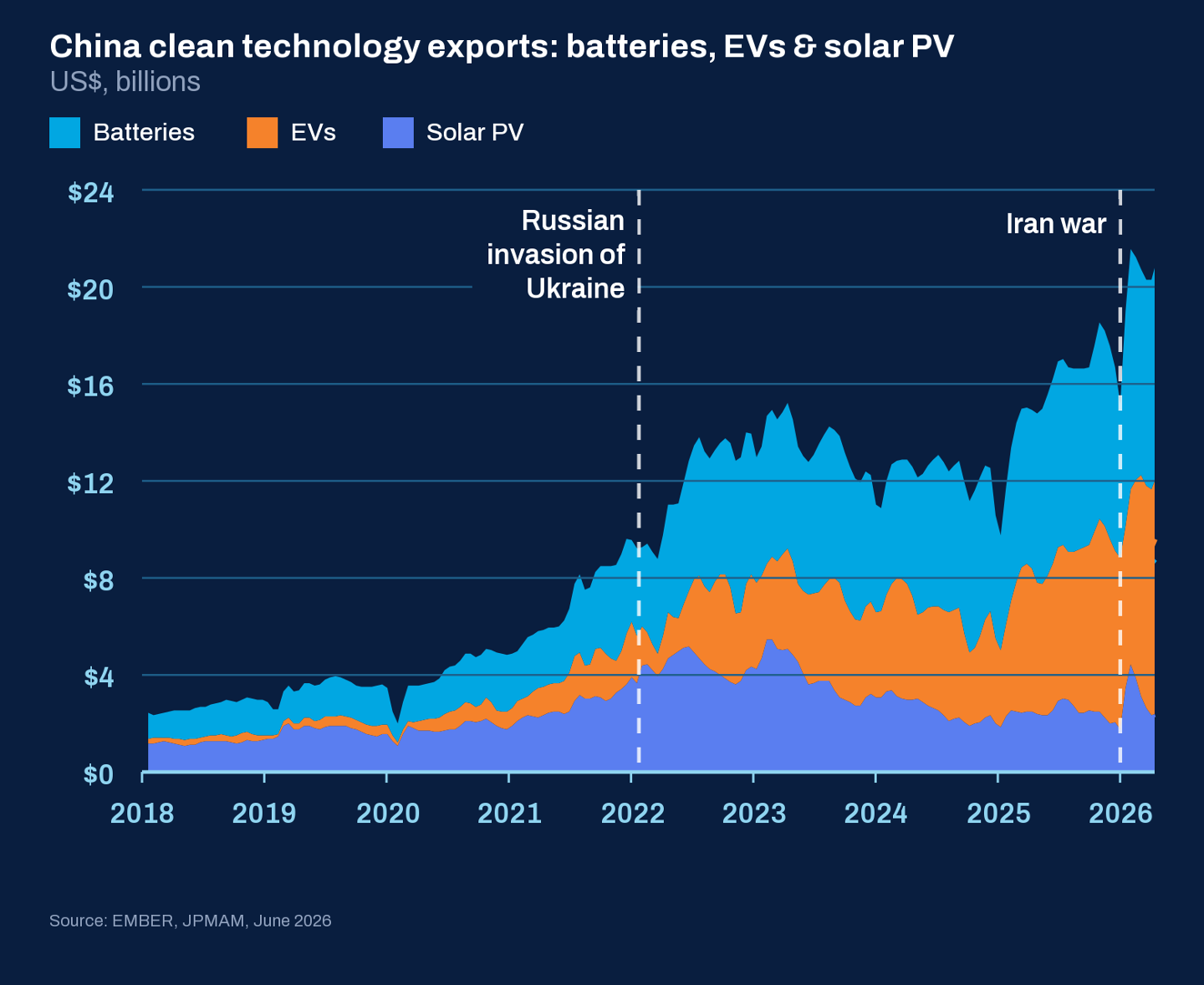
China was perfectly positioned to take advantage of instability. Putin and Trump cooperated.
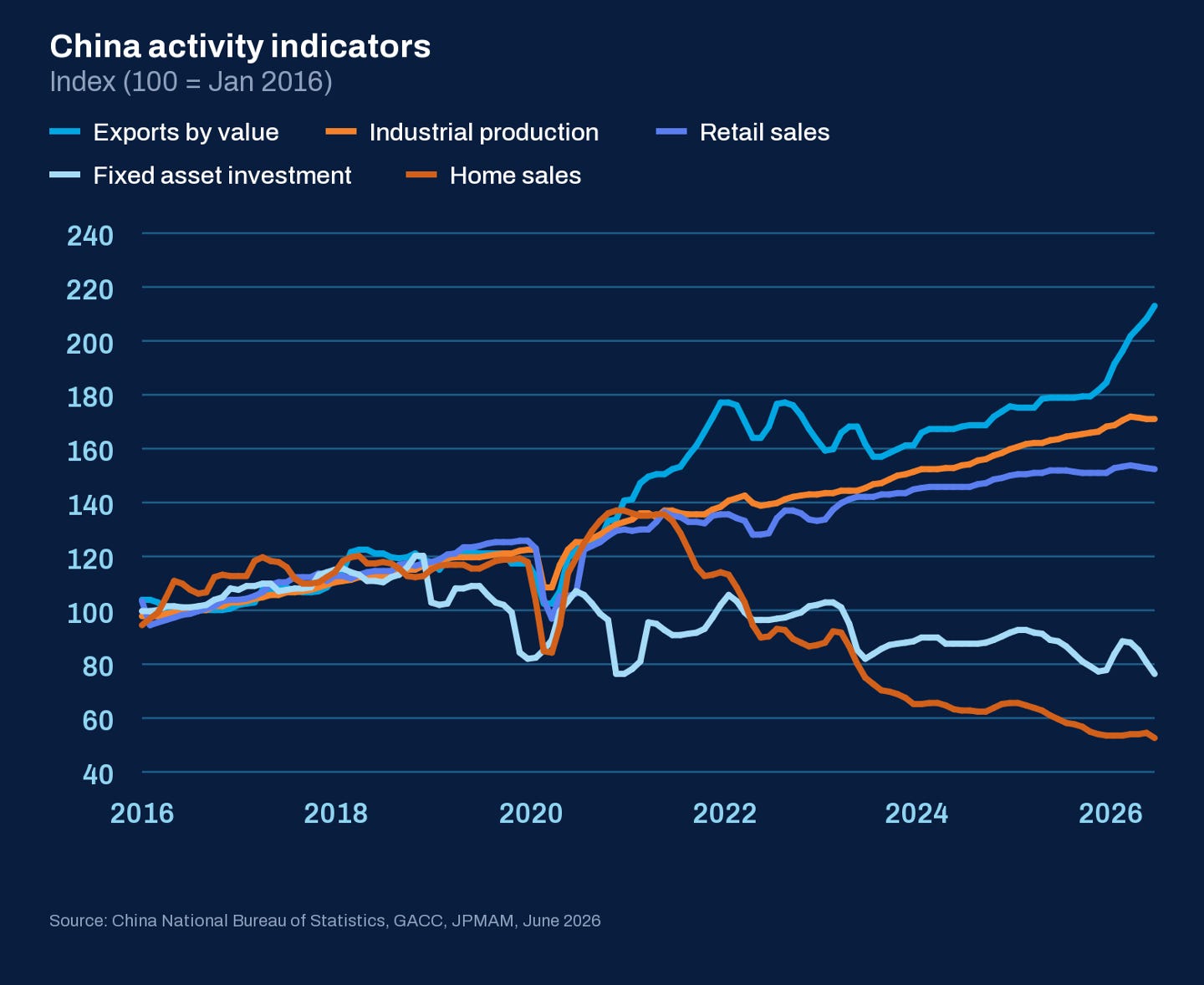
Other than exports, China’s economy is in a precarious place (home sales in particular).
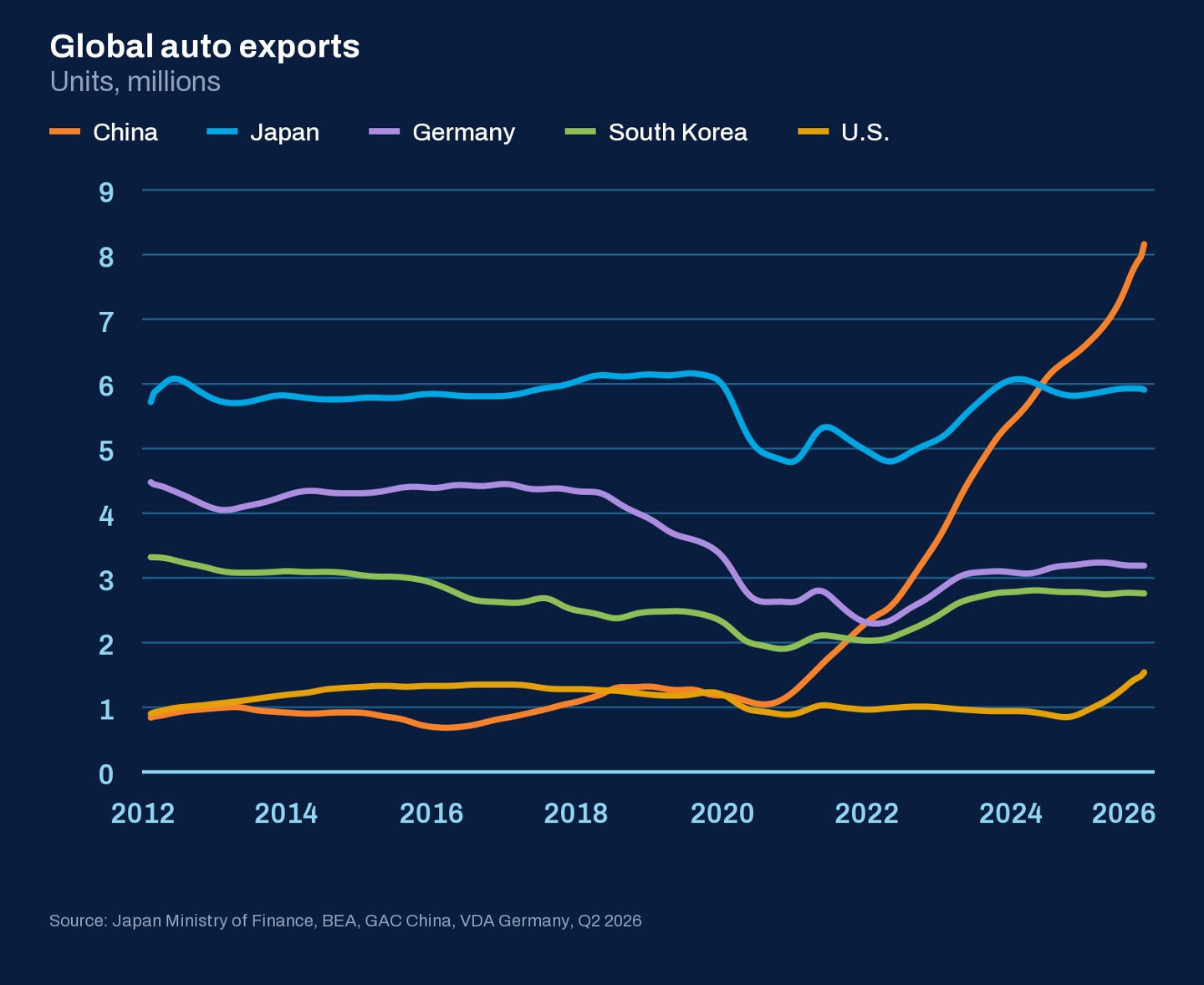
This is cars, not cheap toys. The rate of change is hard to fathom.
What energy security looks like. Climate is just a side benefit.
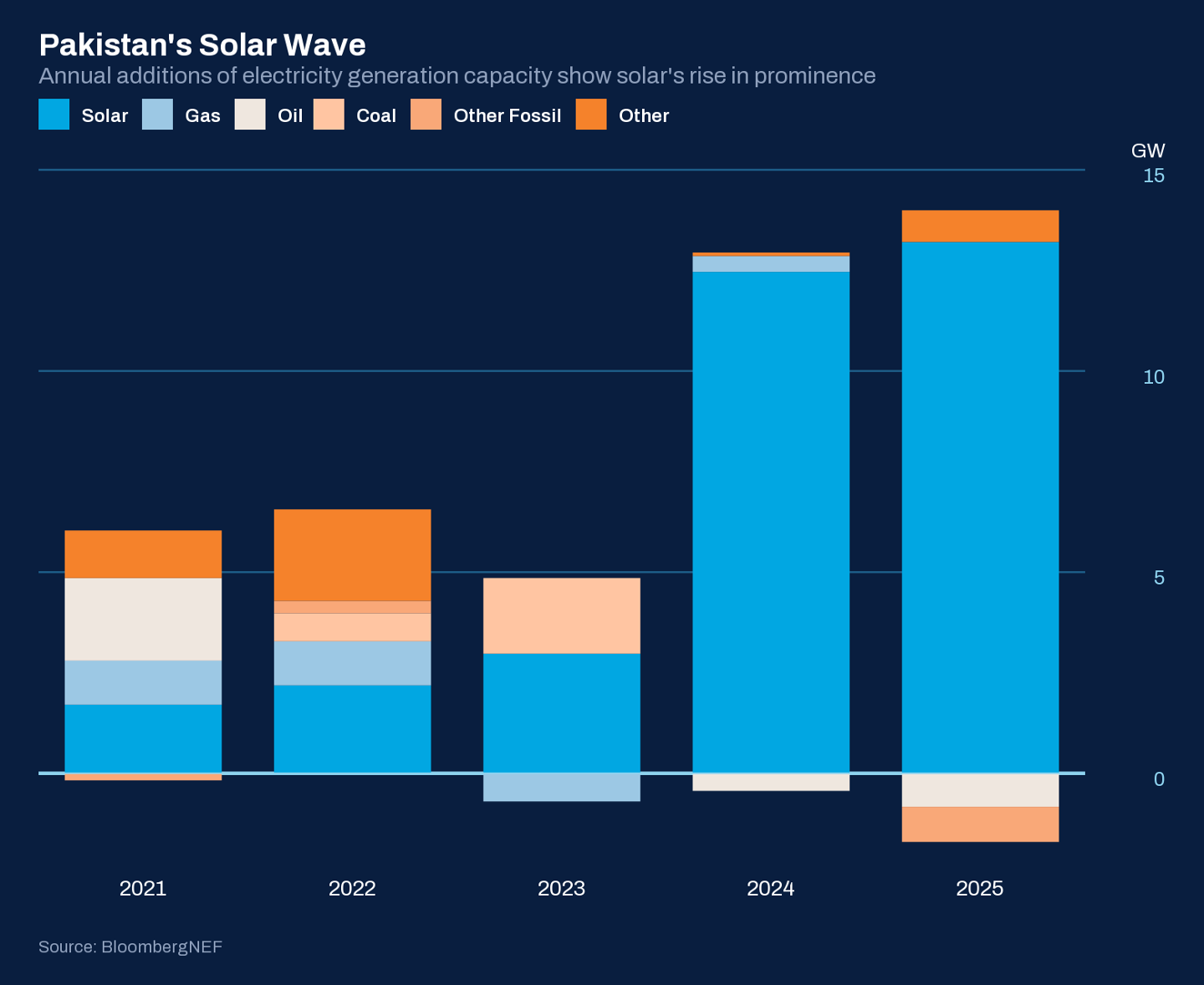
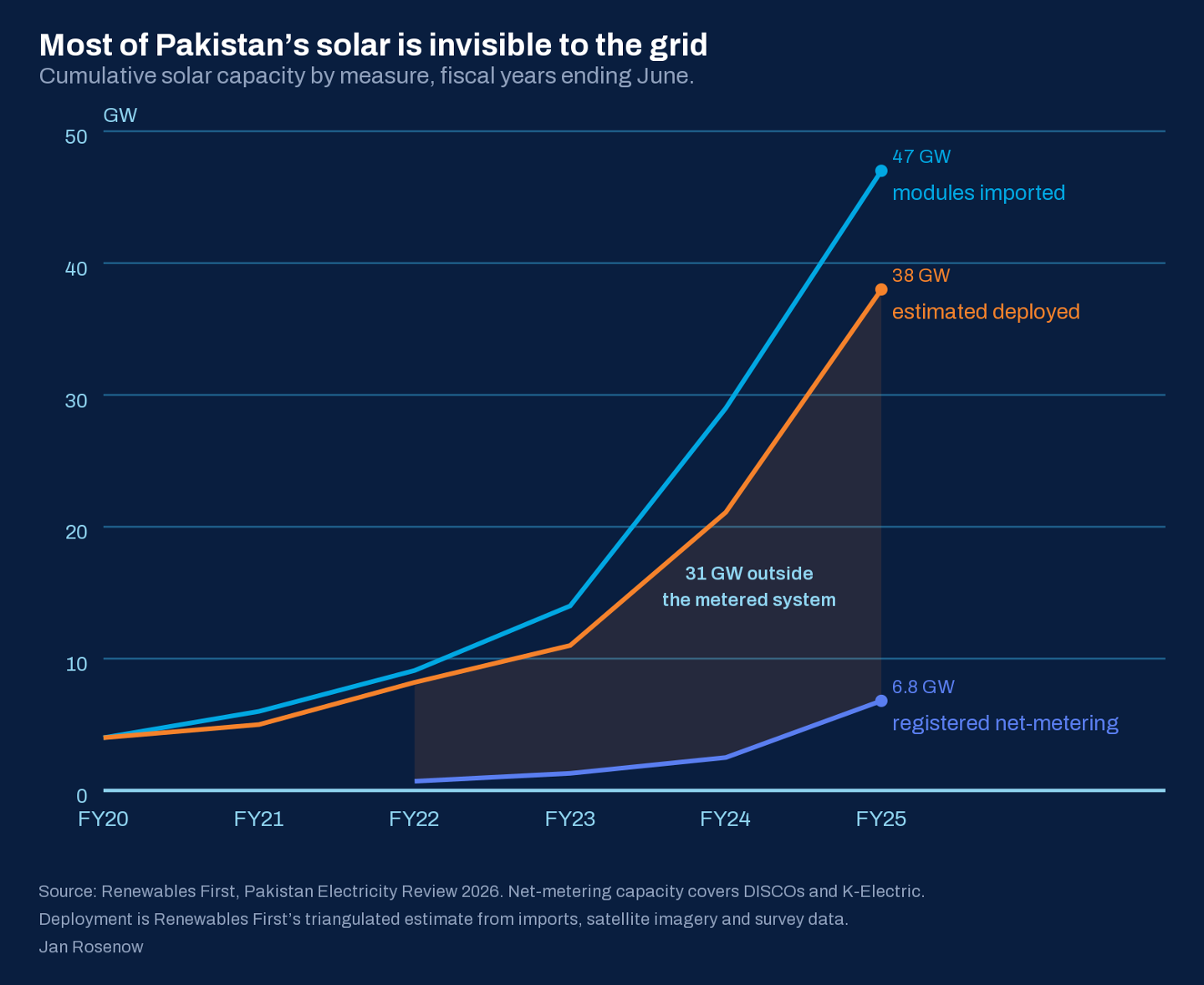
Of all those Pakistani imports, most are not grid connected. Not a great thing, but solvable.

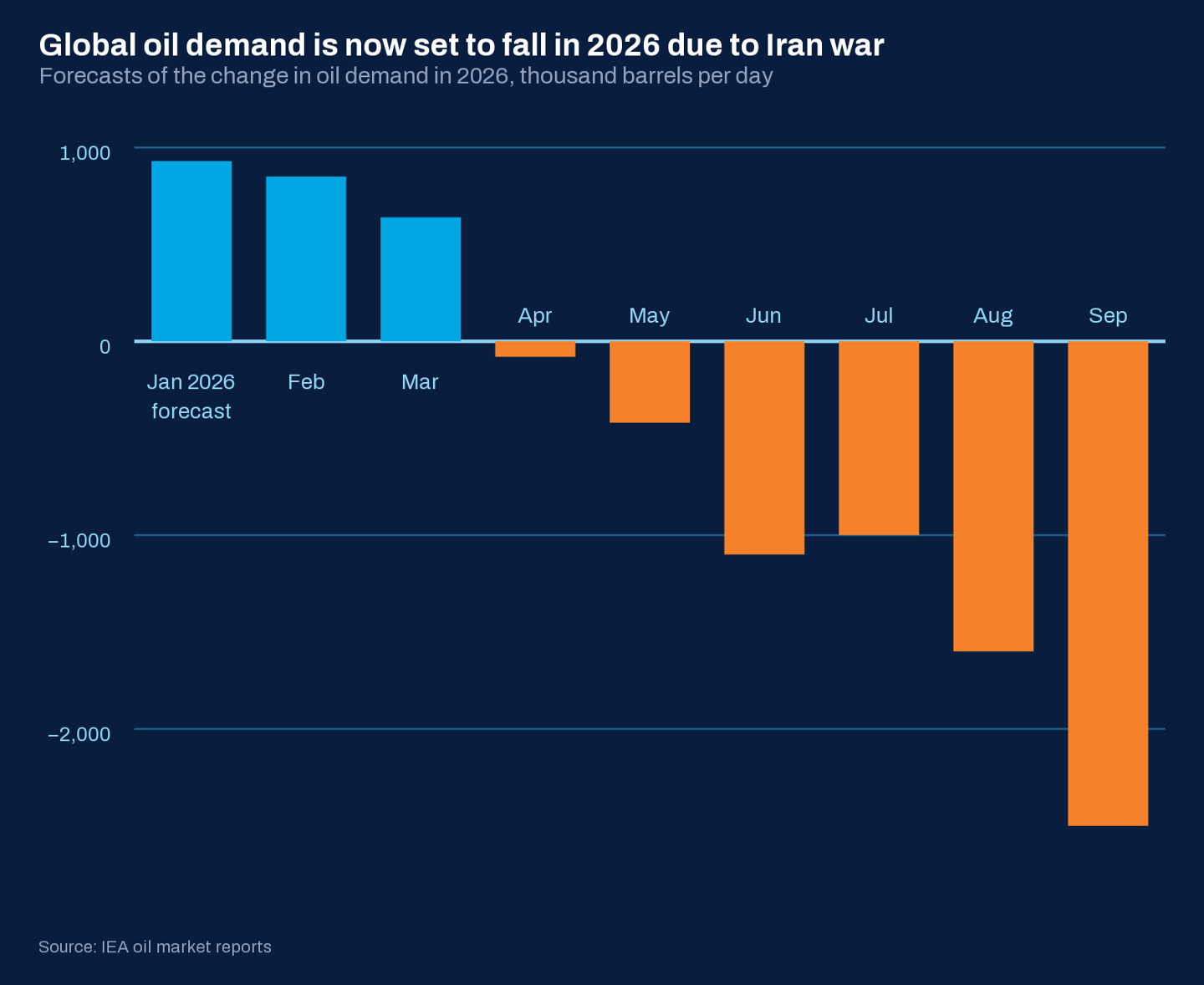
The longer prices are high and conflict persists, the slower the bounce-back will be.
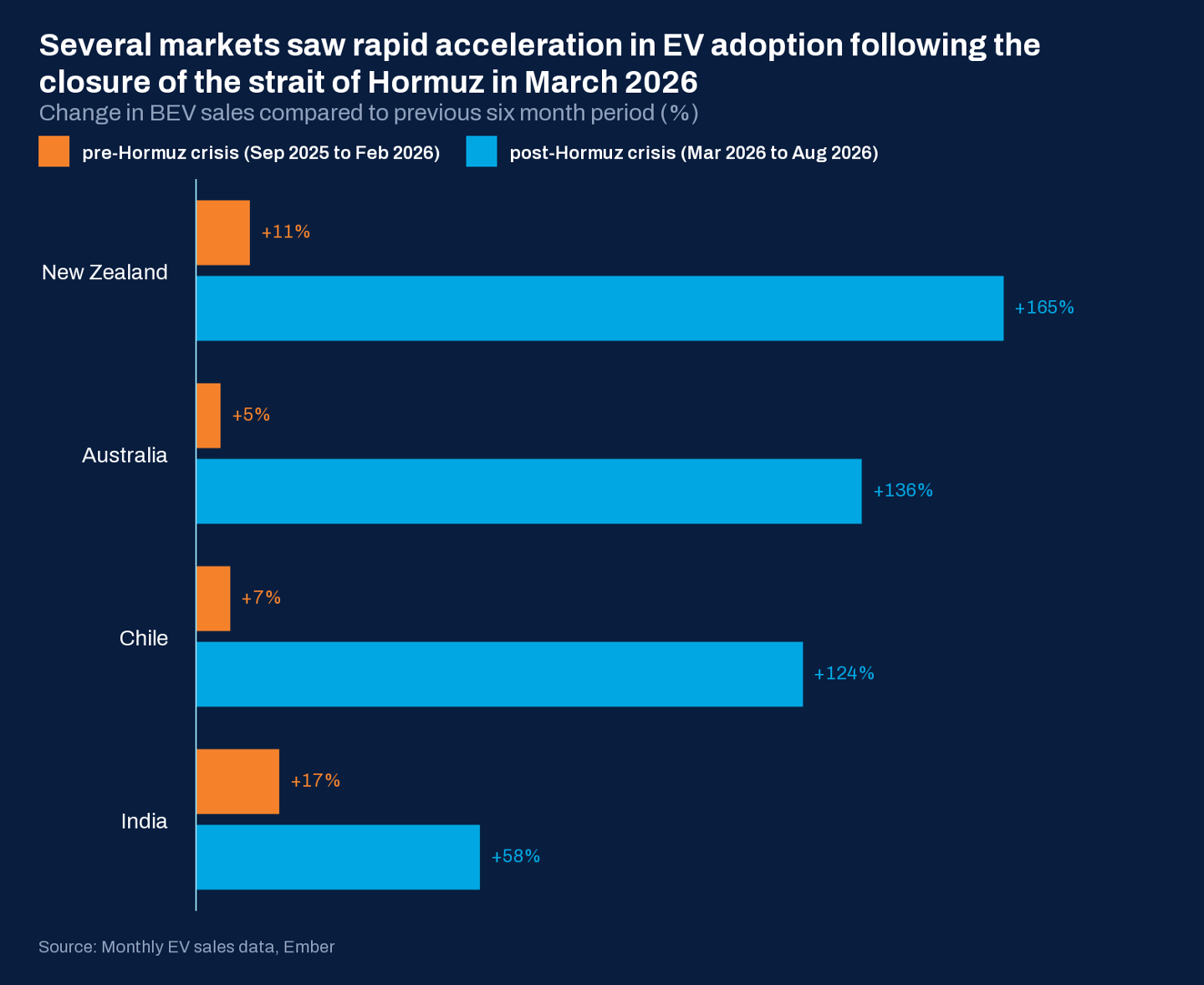
Buyers are responding rationally. Especially in countries with small (or zero) domestic car manufacturing.
Only two key markets in the EU (Czechia and Croatia) are majority ICE.
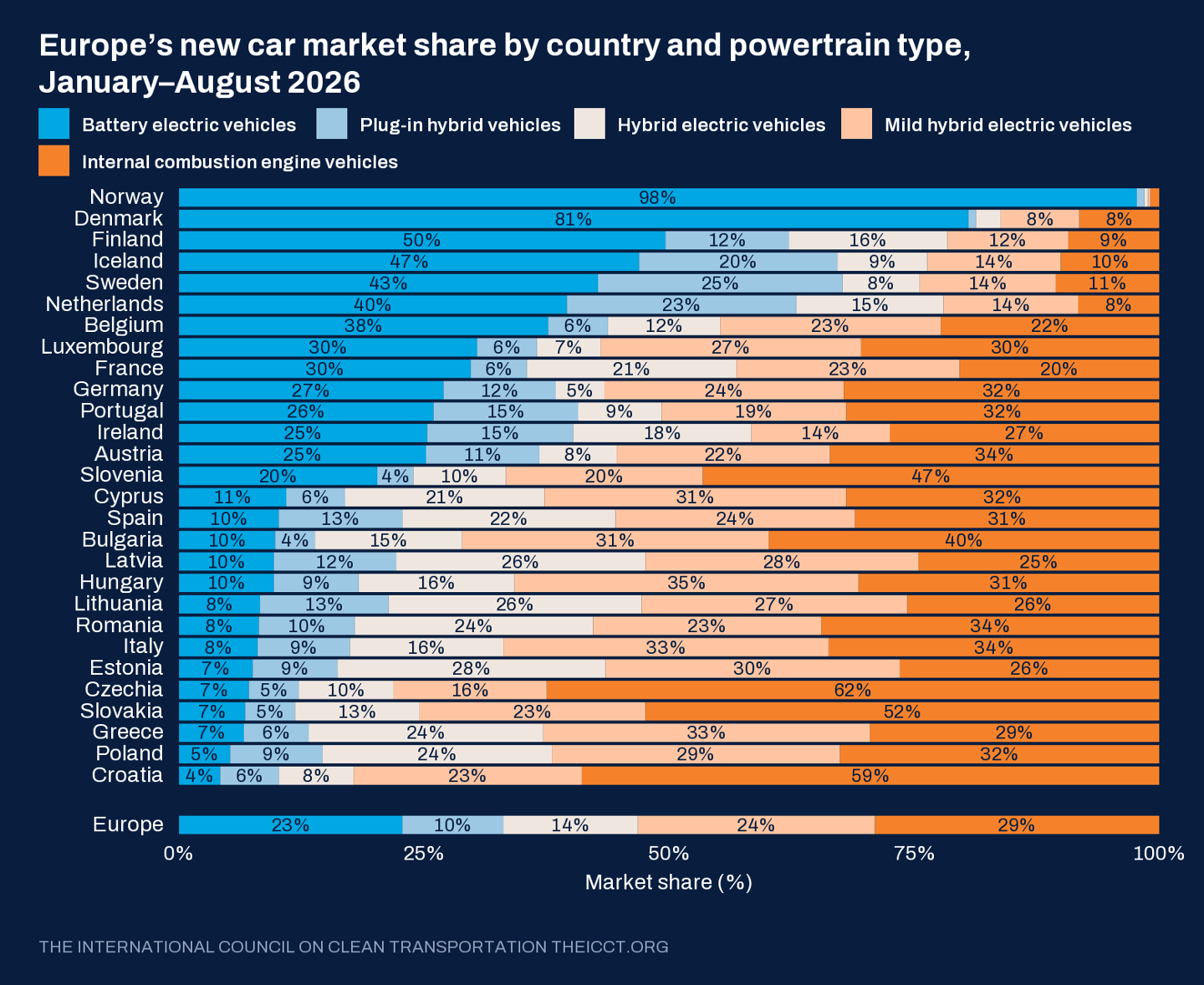
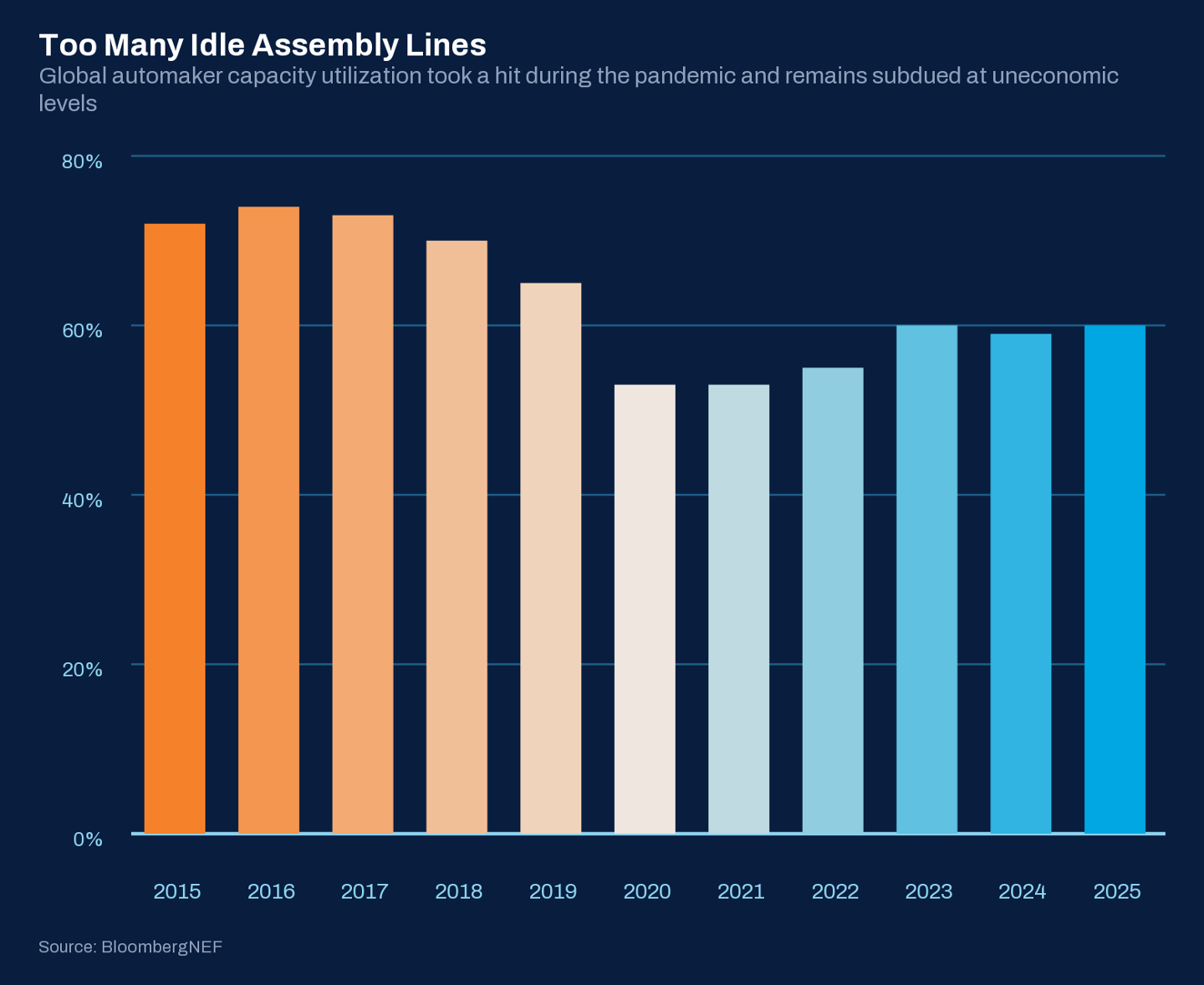
Regardless of drivetrain, global automakers have a massive overcapacity problem.