

25 years ago today, I came to UBC as a student for the first time.
That afternoon, after the second plane made clear what had happened, our instructors did not know what to do.
Somehow a course introduction, syllabus review, or instructions on where to find readings felt out of place.
I was part of a now-defunct program called “Foundations.” Offered by the Faculty of Arts, the vision was an interdisciplinary teams of scholars working to give us, well, a foundation.
Political scientists, scholars of religion, and economists worked together to craft courses that felt disconnected at first, but represented the messiness that is reality. The same class had you reading excerpts from the Old Testament, John Rawls’ theories of justice, and then getting into the nuances of a productivity frontier in economics.
In a time of crisis and unknowing, this diversity was a strength. Because the team understood, deeply, that something was happening. They tossed out the lesson plan, acknowledged the intensity of the moment, and provided us with perspective and wisdom.
We were forced into the torrent of history that day, aware that it would establish a clearly marked before and after. I’m grateful to those instructors for not buckling under pressure and helping us first-years make sense of the world.
Starting a journey of higher education on a day of rupture was probably useful. It established change – painful, sudden, sometimes evil, and often unwelcome – not as an outlier, but as the norm. And that’s a lesson we need to still be teaching.
Twenty-five years later, I still find value in looking across disciplines to make sense of a changing world. That’s part of what I’m doing with Ten Things each week.
This week is a look at how we’re all hopelessly addicted to our phones, how the old in Canada are happier than the young, and how demographics are poised to reshape everything… and more.
Until next week, friends.
Are the Boomers in denial? Or do they just use phones less?
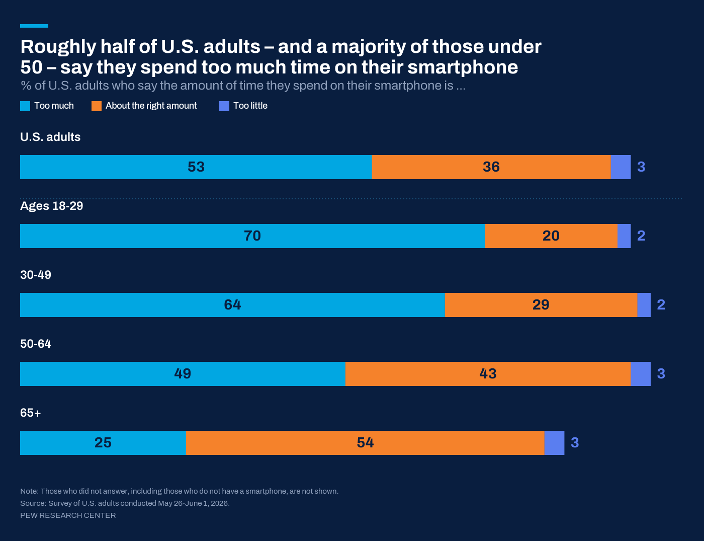
Source: Gallup
Why are old people in Canada so much happier than the young? Other countries are the opposite.
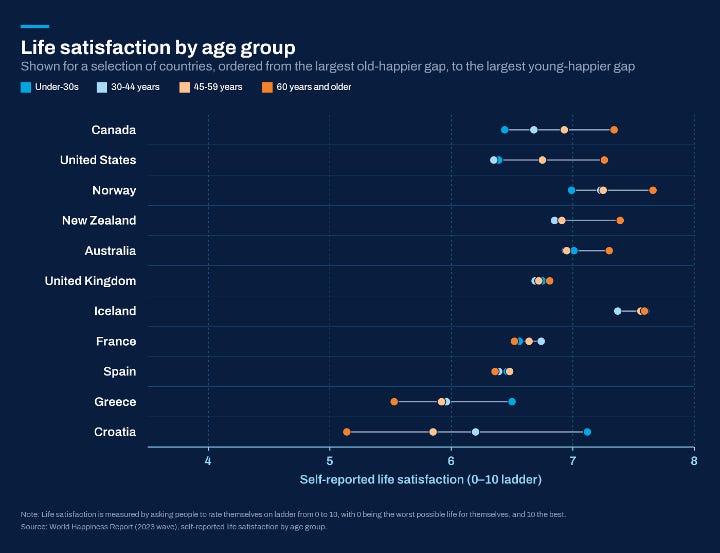
Source: Hannah Ritchie
Since climate, AI, and geopolitics don’t represent enough crises… Why not demographics too!
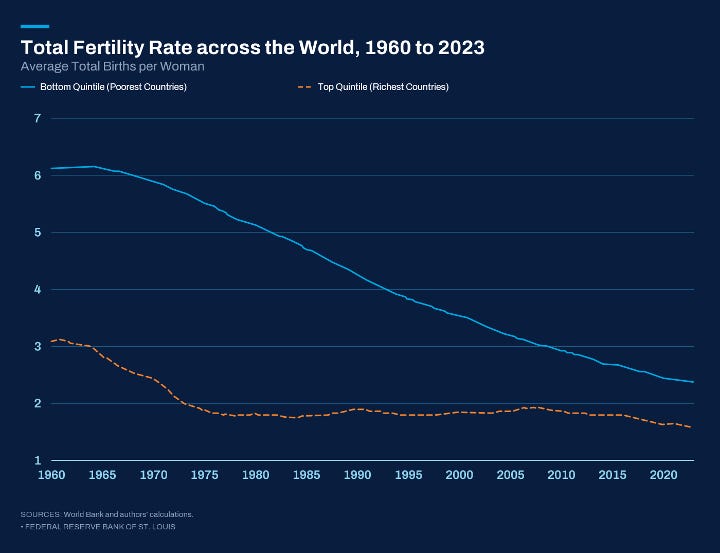
Source: Federal Reserve Bank of St. Louis
Canada needs to take a hard look at its long-term immigration strategy.
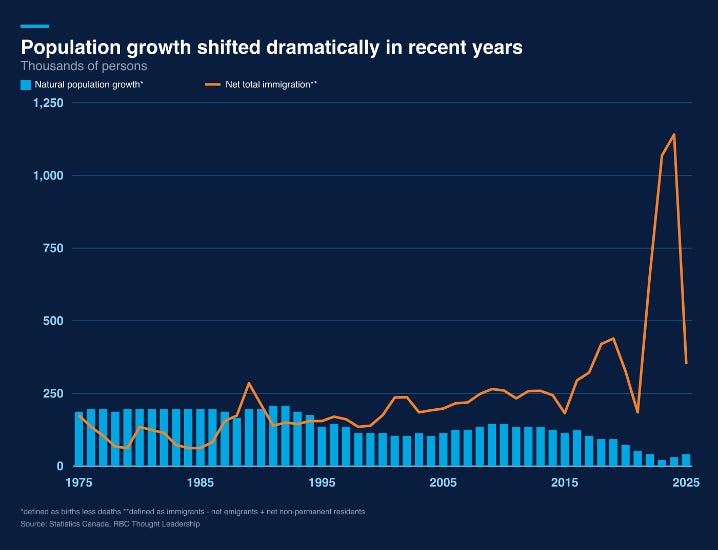
Source: RBC
You don’t often see so many Canadians all agree on something.
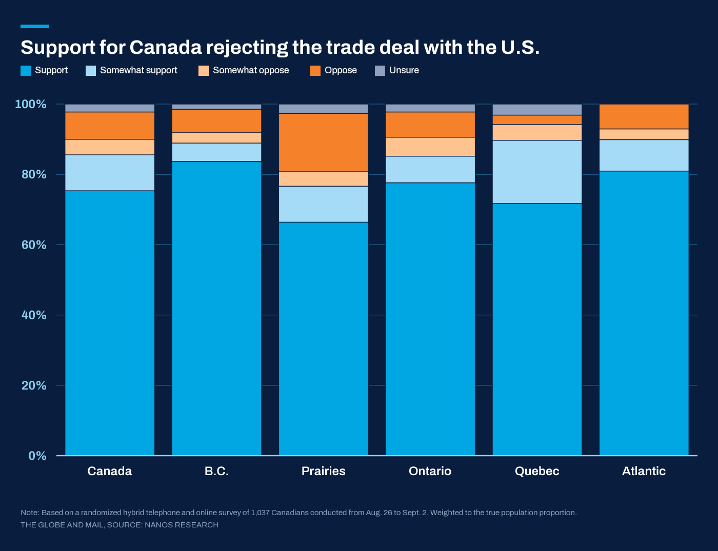
Source: The Globe and Mail
Carney’s approach has a broad base of support.
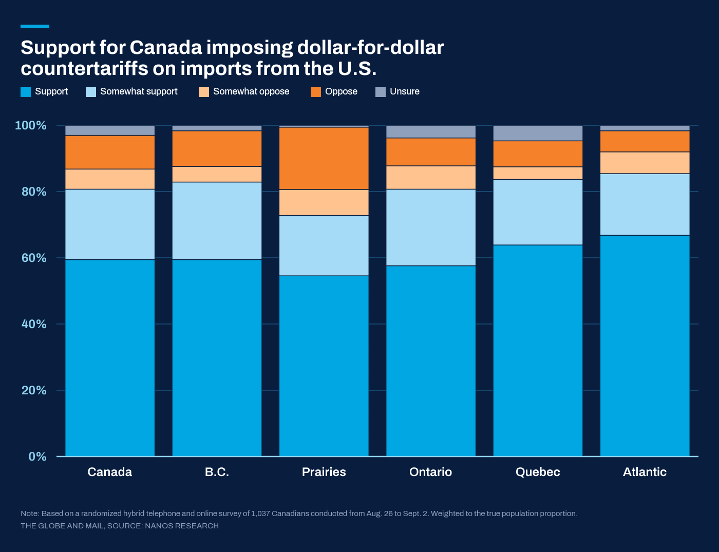
Source: The Globe and Mail
Canadians are constantly being told that Asia wants our gas. We need more long-term thinking.
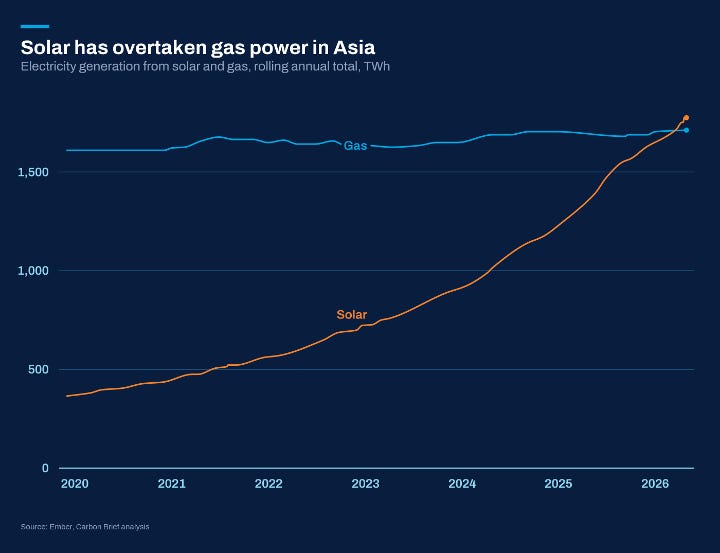
Source: Carbon Brief
Market share of new EVs across key markets. As Razzouk says, “wires chew pipelines.”
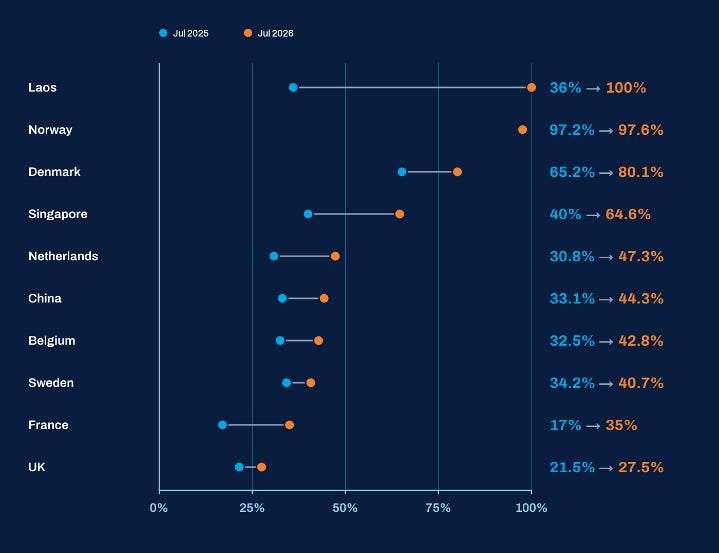
Source: Assaad Razzouk
What once was cool no longer is. That’s not an easy thing to turn around.
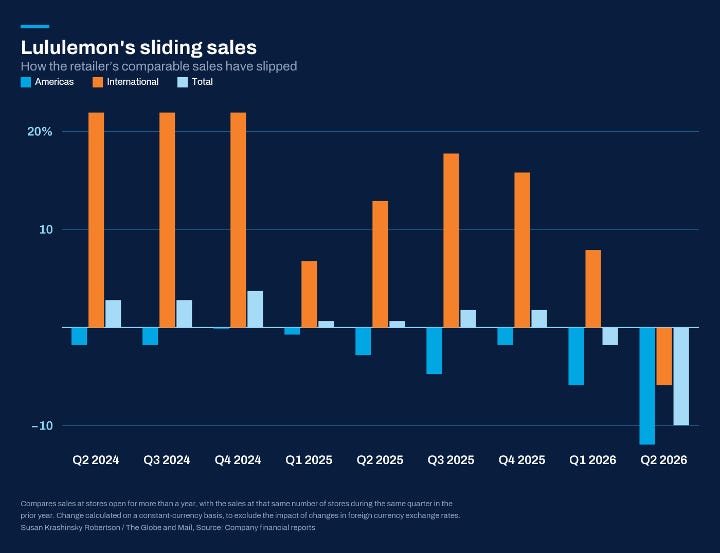
Source: The Globe and Mail

Hate algorithms? Like curated content? Want to pander to your professor? Share this publication with a friend!